Category: NEXT News

  • Product Update: More Roundtrip Loads, Less Deadhead

    Product Update: More Roundtrip Loads, Less Deadhead

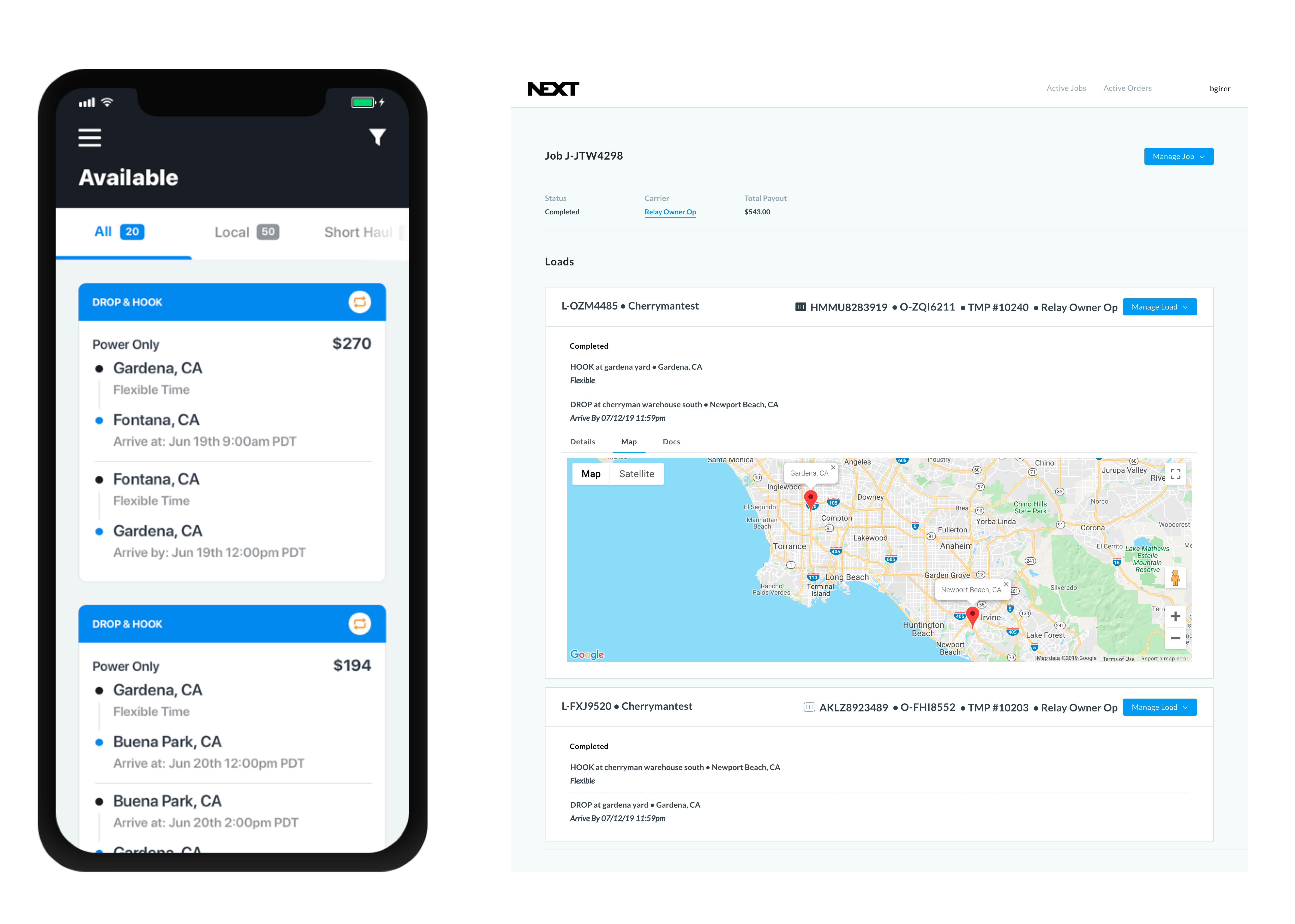
    NEXT has begun rolling out a route-bundling service that allows carriers to easily book roundtrip jobs with the aim to reduce deadhead and more efficiently manage empty miles. The more streamlined feature now gives carriers the peace of mind of knowing that when they book a job going out, they’ll have another one coming back.

    Our mission is to empower truck drivers to work when they want, how they want. We understand finding consistent, reliable work can be challenging and that’s at the heart of this new product feature. We believe carriers shouldn’t have to drive far to earn more.

    In addition to more local loads, the direct result of this enhancement is that drivers and fleet managers can more efficiently manage empty miles, and increase earnings potential. We want to give drivers more opportunities to find and book loads closer to home, with multiple roundtrips replacing the need for long overnight and out of state hauls far away from home and family.

    We’ve spent countless hours with our users conducting focus groups and feedback sessions to figure out how to solve the most pressing issues for truckers. Round trip bundling capabilities have been built in response to the feedback we’ve received from our drivers. Predictability, both in terms of earnings potential and knowing where a driver will be on a given day have been identified as critical in our research, so we’re addressing those head-on.

    Less empty miles, more time with family.

    Book more local loads in the NEXT Trucking app today.

  • DrayTECH 2019 – That’s a Wrap!

    DrayTECH 2019 – That’s a Wrap!

    HTA 6.26.19-5711


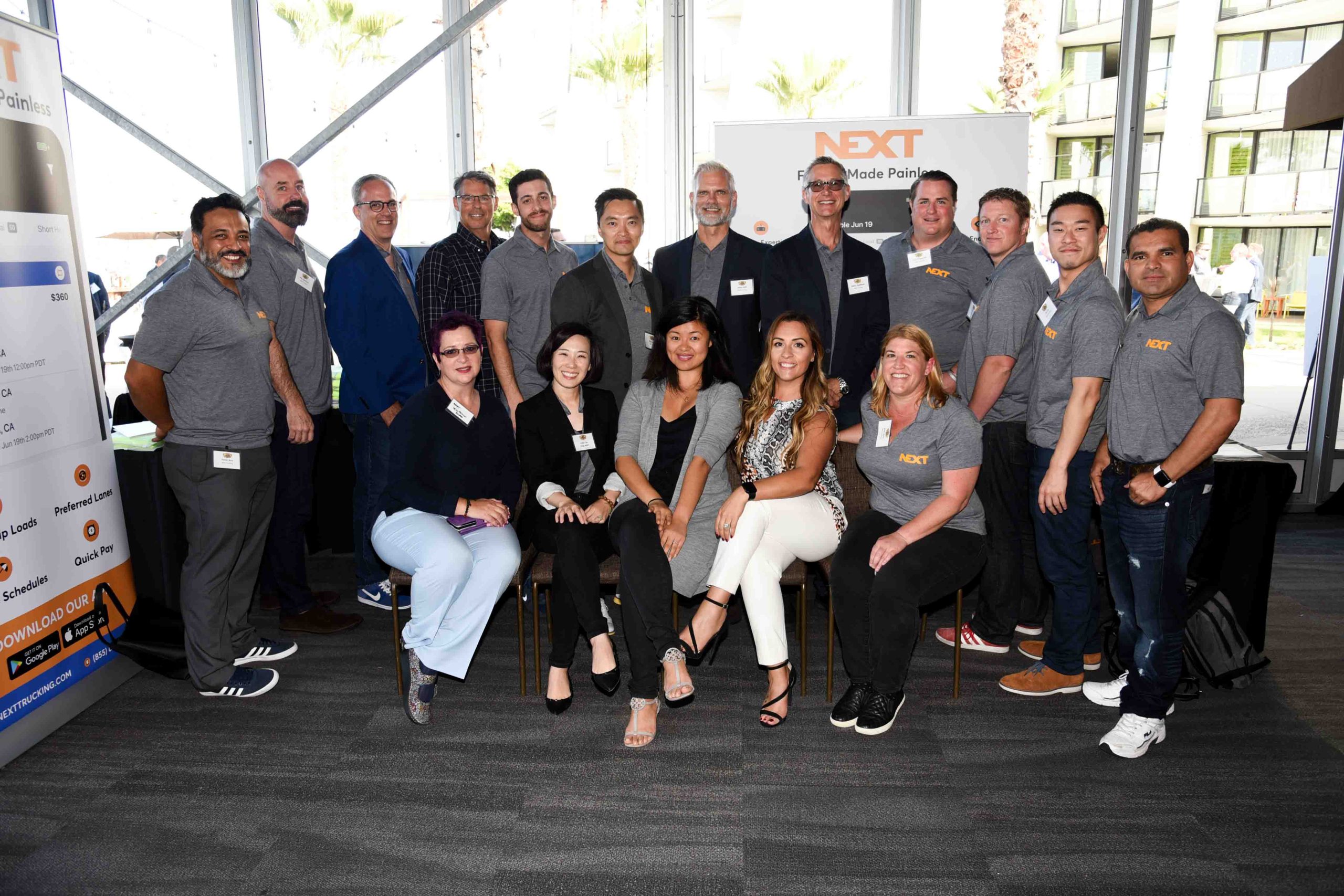
    On Wednesday June 26th, the third annual Harbor Trucking Association DrayTECH conference took place at the scenic waterfront Hotel Maya in Long Beach. This year, NEXT stepped in as the title sponsor of the event, which attracts a number of freight companies, panelists, truck drivers and sponsors all with a vested interest in solving some of the most complex issues surrounding drayage.

    IMG_8430


    The event kicked off with a panel on CleanTech, featuring representatives from XOS Trucks, Clean Energy and Crossroads Finance. An afternoon panel discussed the issues of equipment visibility and tracking technology, with an emphasis on the ongoing pain point of chassis availability at the ports, especially during peak season.

    LA Metro held a breakout session on how to improve the LA county freight transportation system. Overall, LA Metro is looking to play a bigger role in logistics (their original charter is to support transportation of goods and people throughout LA). They are also looking to change their relationship with truck drivers, which has been strained in the past. To change that, they are accepting input from a large number of sources. The discussion then turned to natural gas and EVs — with companies like Edison and PG&E offering massive discounts through state programs ($100k+). Two carriers in attendance who have purchased EVs talked about how the trucks are literally sitting in a yard because there are no chargers powerful enough to charge the vehicles within driving distance. Clean trucking continues to be a hot topic, and one with many different perspectives.

    HTA 6.26.19-5411 (1)


    The afternoon session concluded with representatives from the Port of Los Angeles, Port of Long Beach, Northwest Seaport Alliance, Port of Oakland and LA Metro discussing the state of affairs and the role of the public sector in 21st century port operations.

    Before the final panel of the evening, guests enjoyed cocktails, hor’dourves and some beautiful SoCal sunshine outside the venue facing the Long Beach waterfront.

    HTA 6.26.19-5730

    The evening concluded with Freightwaves introducing NEXT Chief Revenue Officer Bobby Napiltonia, (who brought down the house) with his discussion on the “New Norm” in the freight industry.

    ”We believe we’re due for a makeover. If you don’t, you should probably go home because there won’t be a place here for you tomorrow.”

    HTA 6.26.19-5770


    “Transforming freight starts with drayage. It’s like a dance and if you stumble from the start, you fail.”

    NEXT Co-Founder and CEO Lidia Yan took to the stage to reinforce the importance of the first mile and the need for change.

    “We wanted to be the first technology company to really disrupt, change and resolve the problems that have existed for so many years.

    By combining our virtual fleet and freight marketplace with owned yards/assets, we are able to increase truck turns and container moves resulting in faster deliveries for shippers and greater earning potential for drivers.”

    IMG_8695


    Both Napiltonia and Yan echoed that change begins with reimagining the current business model and forming partnerships to share data and work collectively to bring more transparency to the industry.


    HTA 6.26.19-5814


    Harbor Trucking Association CEO Weston LaBar agrees and has long been an advocate for technology advancements in drayage operations.

    “Technology will be what drives our industry, both literally and figuratively. We need to embrace sharing data and leveraging technology to provide visibility and accountability for cargo-owners. Gone are the days that progress in drayage will be decided by the slowest adopters. They need to get on board or be left behind. Together, HTA, NEXT, and other forward thinkers will lead our industry into a new industrial revolution that is driven by advanced technology. Viva La Revolution!”

    In other words, hold on tight. Change is coming.
  • NEXT Will Add New 18-Acre Drayage Yard in Long Beach

    NEXT Will Add New 18-Acre Drayage Yard in Long Beach

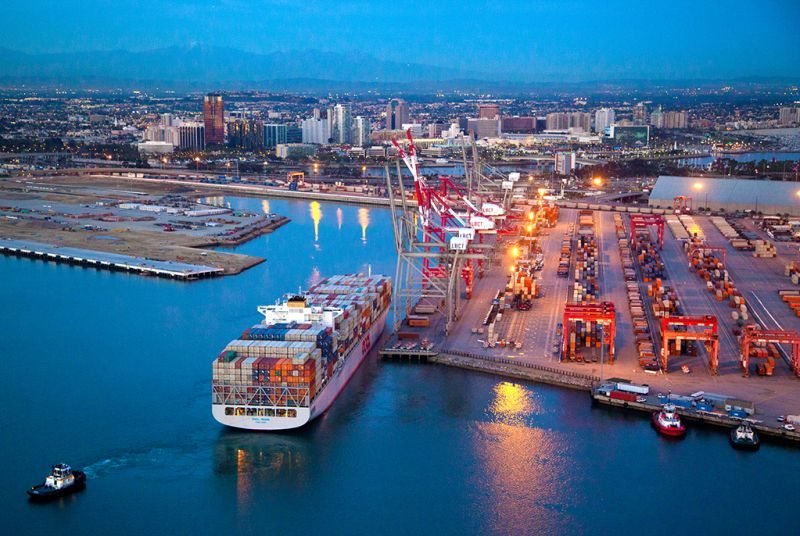
    port_of_long_beach_study_800_536_84_c1


    Doubling Down on Drayage

    At this year’s Harbor Trucking Association DrayTECH event, we are announcing an agreement to open a massive new 18-acre drayage yard, just 15 minutes away from where container ships dock. Forgive the pun, but we viewed the yard as a crucial piece of “beachfront property” that helps us further implement our Relay program.

    To put that 18-acres in perspective, our new yard now has the capacity to handle shipments of more than 400,000 espresso machines or 210,000 electric scooters each day. You’d need that many scooters to handle that much caffeine.

    When we launched Relay last year, the idea was to create a method for alleviating congestion at the ports. Our aim was to give port truck drivers the opportunity to make more money from increased loads and quicker turn times every day. The domino effect of a successful Relay program also means shippers get their containers offloaded and through customs more rapidly, and onto the final destination.

    So far, Relay has delivered on the promises we believed it would. Drivers working with us are seeing their incomes increase by up to 50 percent, while our shippers are seeing over 150 percent more containers pulled daily. This growth has all been achieved with an 8-acre yard in Gardena, CA, which is further away from the ports—imagine what will be possible for our customers with our new yard.

    The new Long Beach yard is a logical extension of our approach and will increase our capacity to uplevel Relay’s efficiency on an even larger scale.


  • NEXT Raises $97M in Series C Funding

    NEXT Raises $97M in Series C Funding

    NEXT Raises $97 Million to Drive the Future of Logistics Forward

    NEXT unveils Relay, a new drayage service aimed at streamlining our nation’s busiest ports while enabling truckers to earn more

    Lynwood, CA–January 23, 2019– NEXT, the technology company that connects shippers and carriers to meet today’s growing transportation demands, announced today that is has secured $97 million in a series C round of financing led by Brookfield Ventures, with participation from Sequoia Capital, GLP, and others, bringing NEXT’s total capital raised to more than $125 million.

    “The logistics space is under more pressure than ever before – with more shipments coming into our ports than drivers and warehouses have the capacity to manage,” said Lidia Yan, CEO at NEXT. “We look forward to bringing new innovations to market to address this issue head on and growing our team with the best and brightest technology talent in Southern California.”

    NEXT will use the funds to accelerate product innovation and launch Relay, a new service designed to address the systemic congestion at shipping ports like the ports of Los Angeles and Long Beach, which account for more than 30% of all U.S. imports. Relay is designed to bring efficiency and expanded capacity for drayage, the process of moving goods from ports to a shipper’s warehouse. By combining NEXT’s virtual fleet and freight marketplace with owned yards, Relay effectively increases the number of trips that trucks can make to and from port, resulting in faster deliveries for shippers and greater earning potential for drivers.

    Relay is currently live at NEXT’s Gardena, CA facility and has already seen early success in pilot. With Relay, drayage drivers increase earnings by up to 20 percent, while local over-the-road (OTR) drivers increase earnings by up to 50 percent. On the supplier side, NEXT customers have seen 167 percent more containers pulled per truck.

    In addition to the new Relay service, NEXT will leverage the funds from this round to expand their technology, operations, and sales teams and expects to open more than 150 new positions in 2019.

    “As the owners of 37 ports worldwide and the first fully automated terminal operator at the Port of Los Angeles, Brookfield knows first-hand the unique and complex challenges impacting the transportation and logistics sectors,” said Josh Raffaelli, Managing Director at Brookfield Ventures. “We are excited to partner with NEXT and are confident that its differentiated technology, strong customer base, and proven execution will enable the company to advance its position as a true innovator in this critical area. We are eager to work with NEXT’s talented management team and identify new areas of growth.”

    “NEXT continues to address the critical issues that face logistics management in the US- from the nationwide driver shortage to congestion and operations at our busiest ports,” said Omar Hamoui, partner at Sequoia. “We’ve been impressed with NEXT’s ability to execute, and the introduction of Relay proves they have the team and expertise to continue innovating in ways that will ease the pain points of carriers and shippers. We’re thrilled to continue our partnership with NEXT as they enter this next phase of growth.”

    To learn more about NEXT, visit www.nexttrucking.com.

    About NEXT

    NEXT is a technology company that connects shippers and carriers to meet today’s growing transportation demands. With smart matching and predictive load technologies, NEXT matches truck drivers with capacity to available loads, streamlining the process and providing drivers with full control over their careers. With the best talent from both the technology and logistics industries, NEXT is developing innovative solutions to solve today’s biggest transportation challenges.

    About Brookfield Ventures

    Brookfield Ventures is the technology investing arm of Brookfield Asset Management. Founded in 2017, Brookfield Ventures seeks to partner and invest growth equity into market leading technology companies that can leverage the diverse real assets and operating businesses that make up the $330+ billion Brookfield economy.


  • Diversity and Inclusion at NEXT Trucking — Fundamental and Necessary to Growth

    Diversity and Inclusion at NEXT Trucking — Fundamental and Necessary to Growth

    At NEXT Trucking, we believe in the powers of diversity and inclusion.
    This is due as much to our core values as our commitment to taking part in a future accelerated and grown by technology. It’s why we’ve partnered with the Mayor of LA on the PledgeLA initiative, and it’s why we were recently recognized with a Stevie Award for women in business. NEXT Trucking was also named one of the Top Companies for Women to Work for in Transportation by Women in Trucking.

    But this commitment is not just about values and recognition — diversity is good for business.

    Here’s why:

    A diverse workforce brings a diversified talent set to your company and its business practices.

    Skills, expertise, experiences from a different perspective — all these things and more can combine to help your organization teach itself from the inside-out. This invariably translates to more growth and success for your business.

    Inclusion reduces fear of being seen as different, which optimizes performance.

    When a company creates an environment of inclusiveness, internally and in its public dealings, employees who may not fit the definition of the workforce or demographic majority — feel more comfortable and supported. This, in turn, greatly reduces the likelihood that such factors might slow down their growth and progress as individuals and contributors.

    It also keeps the door open for them to more freely share their own knowledge, which may come from a different perspective than others, adding to the likelihood of overall camaraderie and collaboration. Inclusion increases comfort across work groups and keeps up morale.

    Different language skills can open new opportunities.

    While language and cultural differences can sometimes cause a company some complications, once these are handled or worked through — entire new lines of business and communication can be opened, locally and globally.

    Beyond this, when clients (and prospective clients) across the world see themselves represented in your workforce, they’re more likely to feel comfortable and to relate to you. That is definitely an advantage to your sales funnel.


    Diversity introduces your business to more of the market.

    Arguments could be made that marketing and selling to various niches of consumers (including B2B buyers) has never been more work, or more fully doable with today’s technology. This being said, it nevertheless stands that you first need to intimately know — and be able to clearly communicate with — various niche groups, among your prospects and current customers or partners.

    When it comes to groups of consumers who come from different backgrounds, having members of those backgrounds within each wing of your operations — prepares you to more effectively recognize and pursue opportunities among them in your market.


    In conclusion, diversity wins.

    Don’t just take our word for it. The statistics don’t lie. When employees feel included, innovation increases by 83%. When a team is diverse, decision-making improves by 60%.

    And 35% of diverse companies (that’s us) outperform homogenous ones. Want to know more about how NEXT does it? Contact us.

  • Due To ELD & Tariffs, Shippers Must Adjust // Press Round Up Week of 4/2-6

    Due To ELD & Tariffs, Shippers Must Adjust // Press Round Up Week of 4/2-6

    The driver shortage is starting to squeeze shippers even more tightly as the first official week of the ELD mandate enforcement comes to a close. With the tariffs and advancements in detention pay, shippers that are already seeing their profit margins shrink need to start looking into supply chain solutions that will help them become more flexible. Here are 5 articles from this week to help get you started.

    MOL Group aims to secure US truck capacity for Asian vendors

    With the right partnerships, shippers can find space even in the tightest of markets. Journal of Commerce featured NEXT Trucking’s new partnership with the MOL Group this week, highlighting the capacity benefits that the deal would provide to overseas vendors. At a time when trucker volume is getting tight, we’re proud to deliver a one-stop logistics and shipping solution for on-the-road trucking, warehousing, and drayage to customers in and out of the U.S.

    U.S. Trucking Prices Are About to Rise Even More

    2018’s forecast looks bleak for shippers’ profit margins. Bloomberg reports on the impact a driver shortage increase in the wake of official ELD enforcement could have on spot rates and contract prices this year. The article also looks at how the ELD mandate is affecting drayage drivers and the industry conversations concerning the mandate.

    All Tariffs, All the Time

    The announcement of recent tariffs on U.S. products has left the manufacturing, agricultural, and transportation industries feeling pressure from increased costs and a potential trade war with China. Logistics Management published a column breaking down the potential impact these tariffs could have on these industries with expert insight on what the end result of this tariff war could potentially be.

    Blockchain tech could put teeth in detention pay

    With technological advancement, detention pay could cut further into shipper earnings. This piece from Overdrive features a new “smart contract” system that uses geofencing and GPS to track if a driver has been waiting for a load for more than two hours. It’s a smart way to kick slow shippers into high gear and force them to improve their supply chain efficiency.

    Supply Chain Commentary: Boost Productivity, Efficiency, and Security in Your Warehouse

    If your profit margins are at risk of being hit by the shortage and ELDs, a quick way to look at ways to optimize your supply chain is by using data. This column from Inbound Logistics looks at how you can use data about your employee output to encourage better performance, as well as improve warehouse security.

  • Feeling the Capacity Squeeze? It’s Time to Get Agile!

    Feeling the Capacity Squeeze? It’s Time to Get Agile!

    By empowering people and sparking their entrepreneurial spirit, companies are using organizational agility to create improved results and inspire creative thought amongst their employees.

    For many legacy corporations, the main obstacle to respond quickly to new market trends and disruptive new market entrants are: extensive hierarchic decision-making processes, competing internal initiatives, and silo-based thinking. When the market shifts suddenly, less progressive companies are often left in the dust because there are too many steps and decision-makers involved.

    Mike Richardson, author of “Cracking the Agility Code,” told me the industry is entering “a new era of better, faster, cheaper that is requiring enterprises of all shapes and sizes to pivot to agile.” Mike then explained that agility is “the ability to adapt to rapidly changing circumstances and stay ahead of our competition in meeting customer expectations.”

    This is relevant now more than ever to shippers as it applies to the current driver and capacity shortage in the full truckload market. Shippers are now expected to meet increasingly narrow delivery windows or pay costly “compliance fees” or penalties, which eat heavily into profits. With drivers being picky about where they want to take loads from, many shippers are balancing price and capacity while they compete to get their goods to market.  

    According to the Journal Of Commerce, the US economy has grown at a rate of 2.6 to 3.2 percent growth over the last three quarters, adding yet another layer of complexity to the transportation capacity issue. Shippers of all types need to rethink their Supply Chain Strategy and specifically their distribution schedules, while increasing efficiency and look at making their shipping and receiving processes more efficient.

    “It’s an industry-wide challenge, including with supply chains and shippers,” Mike said, “Enterprise agility is the only competitive advantage which has any permanence these days.”

    But where does a shipper start with getting that kind of visibility into their supply chain? Without a consolidated log of all their calls and shipment statuses, it becomes difficult to find the blind spots where your supply chain might be weakest.

    The first step would be to find a software solution to post and track shipments. Freight tracking software, like the NEXT for Shippers portal, help shippers see exactly where their loads are by the minute through live GPS tracking. Using this technology, shippers can even more efficiently direct truckers at their warehouses, saving time loading and unloading.

    Plus, with a full shipment timeline for each load and comprehensive metrics measured in the platform, it’s easy to go back and see any weak spots in the supply chain. From there, shipping companies can then implement organizational agility practices and adjust their workflows to start moving loads even more efficiently by putting people and inventory in the right place at the right time. If you are tracking a load and see that it is coming to your warehouse in 15 minutes, move to make sure that you have a dock available for that truck to park in and workers available to move the freight where it needs to go.

    Once you figure out how and when loads are moving in and out of the warehouse, your supply chain will be agile enough to easily recalibrate for whatever shifts the market throws at you.

    Mike Richardson is the author of “Cracking the Agility Code.” You can learn more about his work at agilitycode.com.

    Have more questions about agile supply chains? Reach out to Gina on LinkedIn or email her at gina@nexttrucking.com.

  • Making the Most of the Driver Shortage // Press Round-Up Week of 3/26-30

    Making the Most of the Driver Shortage // Press Round-Up Week of 3/26-30

    As the driver shortage continues to squeeze shippers, many are speculating that the upcoming ELD enforcement implementation will exacerbate the issues further. So what can shippers do to reduce the impact the shortage will have on them? With all the press around the driver shortage, there is, surprisingly, no shortage of information and analyses of best practices for shippers in the tight capacity market. Below are a few articles to get you started.

    FTR: No relief in sight for capacity crunch

    The rest of the year for shippers seems bleak according to FTR Transportation Intelligence. FleetOwner analyzes the study released by the research firm this week that found shippers’ conditions have worsened considerably since 2017, and with rising freight demand, freight rates, and fuel prices. Not all is lost, however – the FTR sees intermodal and rail carload solutions as a quick way to alleviate some capacity pressure.

    Supply Chain Finance: Capitalizing on Growth Trends

    With costs at an all-time high and the yearlong projections looking bleak, shipping companies should be shifting their revenue models to allow them to better adapt to any market changes. This article from Inbound Logistics highlights implementing a supply chain finance model to tap the supply chain for untapped revenue while avoiding the pitfalls of traditional financing models.

    Are Truck Drivers Finally Getting the Attention They Deserve?

    Part of the downturn shippers are experiencing is due to the higher wages and benefits drivers are now receiving to reduce turnover. HDT Truckinginfo breaks down how the trend has impacted industry capacity and how market trends will develop in the coming years.

    Five Ways the Electronic Logging Device Is Changing Trucking

    Enforcement for the ELD mandate is officially starting this Sunday, but there’s already been a lot of talk about how it could affect the industry. Trucks.com sat down with DAT Solutions to look at how electronic logging devices have affected trucking in the months since December, including trucker employment rates, overall productivity, and insurance rates.

    Lower container dwell time points to efficiency at Ports of Los Angeles/Long Beach

    With the tight capacity market squeezing logistics companies everywhere, many are changing up their processes to make moving cargo more efficient. Logistics Management reports that despite the deluge of shipments that the Ports of Long Beach and Los Angeles experienced during the Lunar New Year last month, the average time cargo stays on the docks is going down.

  • Fresh Perspectives on Standard News // Press Round-Up Week of 3/19-23

    Fresh Perspectives on Standard News // Press Round-Up Week of 3/19-23

    The trucking industry is often criticized for sticking to traditional ways of thinking, even by those in the trucking media. We often see the same topics in industry publications rehashed over and over again to the point of cliche. While the issues facing the industry are complex, article perspectives usually take the same POVs industry-wide. This week, however, there were a lot of fresh takes on some of the most talked about topics in 2018.

    Special report: Day of reckoning in driver shortage saga

    If you’ve been struggling to find new talking points about the driver shortage, Consumer Carrier Journal has got you covered. The publication published the first piece in a 3-month series on the shortage’s potential impact on the growing economy, so you can continue to mine the issue for talking points well into the summer with hard facts and numbers.

    Bill Would Create Pathway for Under-21 Truck Drivers

    Not all is bleak on the horizon in the trucker shortage, though. Trucking Info reports on a bill that is making its way through the U.S. House of Representatives that aims to alleviate the trucker shortage by letting 18 year olds earn limited commercial driver’s licenses to transport cargo within state lines. Though not a complete solution, the bill looks like a promising start towards fixing the driver shortage while alleviating the trucking industry’s age problem.

    Technology and maximizing your most precious resource

    The trucking and logistics industries are currently going through a period of difficult change, making it hard to see the potential impact while dealing with growing pains. Luckily, Overdrive has an insightful column about the positive impact these changes from – get this – a trucker. The writer thoughtfully takes on autonomous trucks and ELDs are not only here to stay – they’re just what the industry needs.

    Creating The Internet of Everything

    As data from the supply chain moves out of the warehouse and into the cloud, the possibilities for innovation become endless. Inbound Logistics takes a look at different companies and the solutions they are providing over the entire supply chain, from the manufacturing belt to dock doors.

    Leveraging Traffic Data for Smart Transportation

    With all the existing data available, seeing the possibilities for the future of transportation become alarmingly clear. Logistics Viewpoints breaks down the way that cities can leverage traffic data to make their cities easier to navigate, less congested, and economic. While most of the article is relevant to city planners, the smart logistics professional will certainly be able to identify ways they can use data to clean up their supply chain from this piece as well.

  • Logistic Optimization in the Digital Age // Press Round-Up Week of 2/26-3/2

    Logistic Optimization in the Digital Age // Press Round-Up Week of 2/26-3/2

    Many shipping companies today use technology, but most are not getting the most potential out of their electronic devices. New innovations have integrated themselves into the supply chain more than ever before, but it still feels like the industry is just scratching the surface as to what’s possible with digital logistics. So how exactly is tech changing the trucking industry? Here are 5 pieces that look at the possibilities of the internet supply chain.

    Food & Beverage Ecommerce: How Online Shopping Impacts The Supply Chain
    With 16% of adults taking part in the fresh produce ecommerce chain, the online food and beverage supply chain is becoming even more crucial to food retailers’ day to day businesses. This piece at Supply Chain Management Review goes in depth on the best practices for managing a digital produce marketplace and the various considerations to take into account when starting one.

    Why Trucking and Logistics Will Lead the Autonomous Vehicle Revolution
    While autonomous vehicles have been in development for a much longer time in non-commercial vehicles, this piece at Trucks.com goes in-depth as to why trucking is at the forefront of the innovation. The article goes into all the different ways that trucks are experimenting with innovation, and is great further reading for our autonomous trucks post from last week.

    Are Your Trucks Ready for Last-Mile Logistics?
    One of the rising trends to come out of the ecommerce is popularity of last-mile shipping, so preparing your fleet to properly execute this type of delivery can be crucial. Trucking Info takes an in-depth look at what kind of trucking technology and logistic precautions fleets need to start going the final mile.

    Store Fulfillment for E-Commerce Success
    While it is commonly thought that the rise of online stores means the fall of brick and mortar shops, that might not be the case. Logistics Viewpoints examines how physical stores are being repositioned within the new digital supply chain, and the different ways that customers today are feeling about walking into a store in the digital age.

    Tech, not consolidation, will drive container shipping change
    With seven container carrier companies closing over the past two years, now might be the perfect time for overseas shipping to experience a radical technology change. The Journal of Commerce argues that getting these companies to use one neutral blockchain platform now is easier than ever, and could give the industry the shake-up it needs.