Author: admin

  • NEXT Mitigates COVID-19 Challenges Across The Supply Chain

    NEXT Mitigates COVID-19 Challenges Across The Supply Chain

    With the impacts of COVID-19, companies are having to alter their supply chains. At NEXT we are continually taking steps to serve BCOs, steamship lines, terminals, and 3PLs, with flexible solutions that meet the needs of a rapidly shifting landscape.  Over the past few weeks here are some of the ways NEXT has helped mitigate challenges across the supply chain.

    • One of the largest online retailers in America saw a capacity shortage limiting its ability to move goods from distribution centers into local facilities. NEXT met its client’s needs within a day, using NEXT’s hybrid model to coordinate deliveries throughout the U.S.
    • A top 5 U.S. pharmacy has been relying on NEXT to address all of its drayage needs. As a result of partnerships with terminals at the Ports of Los Angeles and Long Beach, NEXT can offer its shippers access to goods three to five days faster than other solution providers, allowing this client to ensure all of the essential products its customers need are available.
    • A multi-billion-dollar 3PL is utilizing NEXT’s yard space to avoid demurrage fees that many shippers face as a result of congestion at the ports. By relying on NEXT’s facility, just a few miles from the Port of Long Beach, this 3PL can ensure its shippers avoid unnecessary charges.

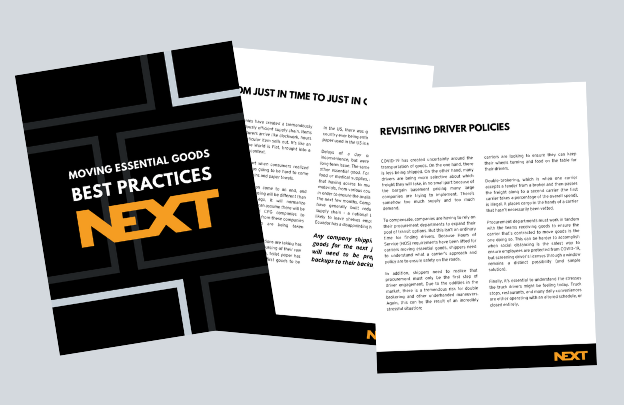
    To help shippers get through the disruptions caused by the coronavirus, NEXT recently published a white paper outlining best practices for logistics planners and professionals. The free report is available here.

  • Under the Hood: Introducing DrayDocs

    Under the Hood: Introducing DrayDocs

    Earlier this week, we previewed a new feature on the blog, Under the Hood, aimed at highlighting updates we’ve made to our technology. 

    Today, we’re debuting the initiative, with a back-end solution that will help our marketplace drivers get paid faster.

    Introducing DrayDocs, a document management tool that will drastically simplify the process carriers go through when organizing, tracking, and submitting transactional documents for drayage loads.

    Document Upload Update

    Crop_CDM

    Once a load is complete, carriers will be prompted to upload documents into specific categories, as opposed to bulk upload. This approach helps us make it clear to a carrier which documents are required to complete a job and to get paid.

    After a document has been uploaded through a new, easy-to-use interface, carriers will be able to crop, rotate, and adjust the photo to ensure the document submission is clear. By allowing editing functions for each document, we can drastically lower the chances of faulty image uploads.

    Accessorial Add-Ons

    Add Accessorial

    This release will additionally allow carriers to add accessorials fees to invoices, for both drayage and OTR, directly in the NEXT mobile app.

    For example, if fees have been accrued while hauling a load, carriers can easily select the fee type from a menu, enter the fee amount, and receive a receipt of the charge. This will ensure all costs are correctly and efficiently added to the invoice without delays.

    Additional Updates For Shippers and Terminals

    In addition to the NEXT mobile app updates, this release will create improvements for our partner shippers and terminals. Because the interface is dynamic, we can ensure that all of the documents a shipper needs are sent in tandem with invoices.

    DrayDocs capabilities for carriers are now available in the NEXT mobile app. We’re excited to see what you think of the new features.

  • Celebrating Earth Day with NEXT

    Celebrating Earth Day with NEXT

    Supply chains and the trucking industry are not typically at the forefront of environmental change. However, at NEXT we are committed to a  greener future.

    NEXT has a goal to operate a fully clean fleet by the start of 2025, (a full decade ahead of when clean air regulations will require us to do so) and actively partnering with several of the top electronic vehicle manufacturers.

    Through our technology, we have created a multi-prong approach to limit idling and deadhead, ensuring each mile driven hauling freight is as meaningful as possible.

    • On the drayage side, we’re making it faster for terminals to move containers out of their hands and on to their destination. Creating land bridge solutions that help trains load more quickly, and simply moving containers out to storage facilities. At NEXT we have dramatically helped reduce carbon emissions at the Ports of Los Angeles and Long Beach, among the most heavily polluted areas in California.


    • Deadhead miles are a drain on every player in supply chain, but also create unnecessary emissions. The NEXT mobile app has been calibrated to allow drivers to book round trips and multiple loads that lessen both drive time and wait time resulting in lower emissions.


    • At our yard, we’re learning (and sharing) best practices for getting trucks in and out more rapidly. Through geofencing, we can have an accurate ETA on when a truck will arrive, making their containers easily accessible, and ultimately mitigating wait times.


    While this Earth Day is unlike any other in history, our commitment to helping create a more sustainable future still stands.

    Wishing everyone a safe and happy Earth Day.

  • Introducing Under the Hood: How NEXT Builds Products

    Introducing Under the Hood: How NEXT Builds Products

    Introducing Under the Hood: How NEXT Builds Products

    This week, we’ll be launching a recurring series on updates we’ve made to our product. We’re calling it “Under the Hood,” and the idea is to spotlight updates to our app and other technology, all aimed at creative painless freight.

    For background, NEXT uses agile principles, meaning our product teams utilize short sprints to improve the experience for our users (drivers and shippers) and, in our case, push an update every two weeks. Sometimes, the update is relatively hidden and aims to make things faster across our logistics operating system. In other instances, however, our updates are very forwarding facing, such as an improvement in the way drivers can upload a POD.


    Under the Hood has two goals. The first is to share what we’ve pushed into production, and discuss why we’re launching a particular feature or function. The second, and perhaps most important, is to garner feedback.


    Because we’re an agile shop, feedback from our users plays a critical role in helping us prioritize our product roadmap. We have groups of shippers and drivers that regularly meet to provide insights on how our solution can make things easier and more effective for them. Under the Hood is meant to create a new feedback loop, letting our users have a peek into how we’re building products and letting us know what should be next on our roadmap.

    The comments section will be open for any and all of the Under the Hood posts. We look forward to seeing what you think.

  • Thank you, Drivers

    Thank you, Drivers

    Thank you, Drivers.

    A film from the NEXT team honoring drivers on the front line.

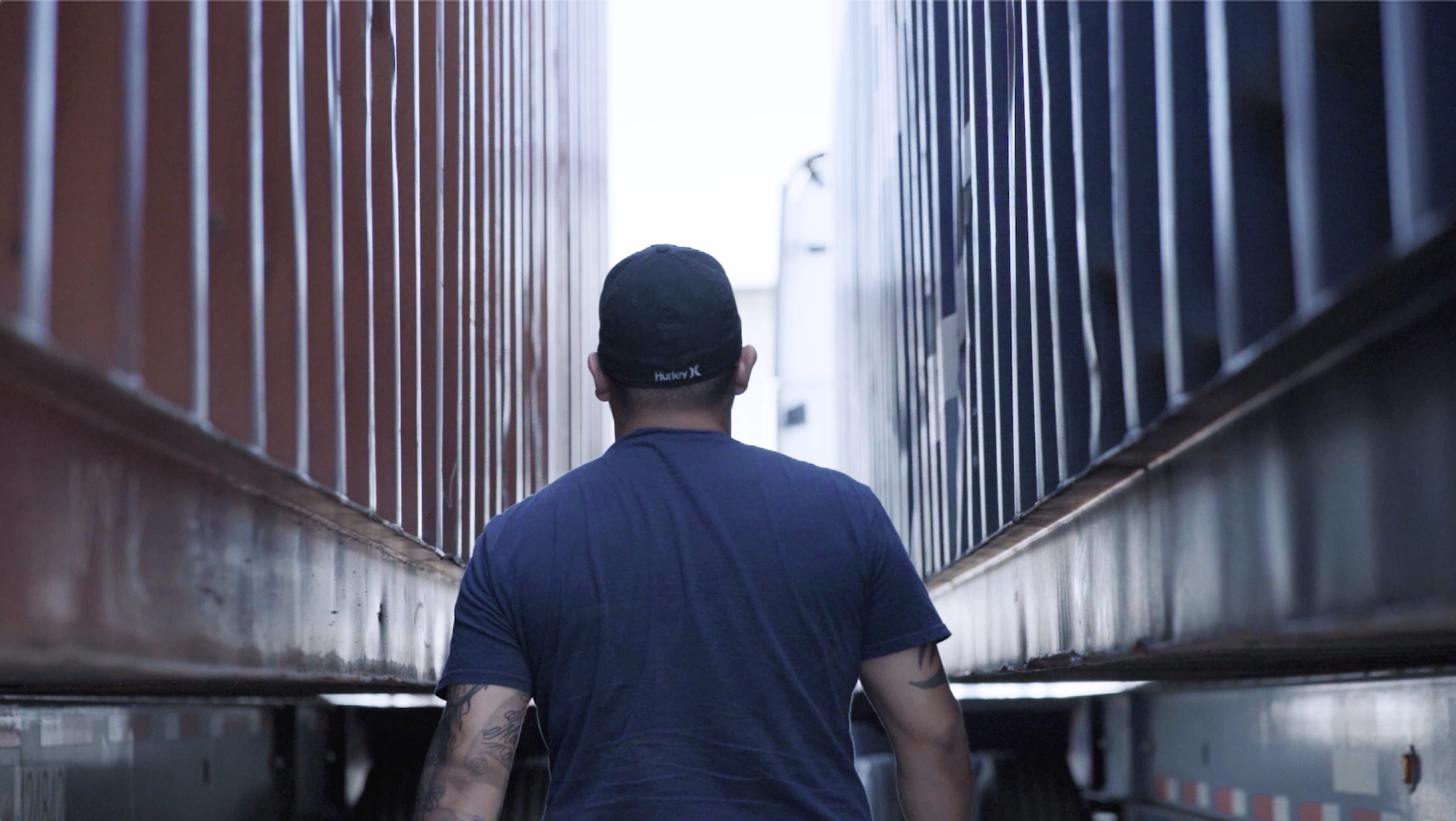
    As the world faces a global pandemic, truck drivers remain on the front line delivering the goods and medical supplies we need to battle the COVID-19 pandemic. For many, it is just another day on the job. But their sacrifices of being on the road, in such uncertain times, to keep the economy moving should never go unnoticed.

    Their dedication and hard work serves as a reminder to us all that truck drivers are the unsung heroes fueling our way to a brighter tomorrow.

    From all of us at NEXT, thank you.

  • Best Practices for Moving Essential Goods During COVID19

    Best Practices for Moving Essential Goods During COVID19

    Logistics leaders are being confronted with an unprecedented challenge as a result of the Coronavirus (COVID-19). While pandemics have swept the globe before, the just-in-time nature of many supply chains has led to incredible turmoil.

    The typical rules of supply and demand have been forgotten, as companies race to ensure their essential goods make it to store shelves, and ultimately to consumers.

    We created a resource to help shippers navigate these incredibly complicated times, layering in best practices from many of the world’s most advanced and robust supply chains.

    Among our key findings, learn how forward-thinking shippers are:

    • Changing their approach to sourcing materials and resources
    • Building redundancy across their supply chain
    • Creating new approaches to working with truck drivers

    Eight of the top ten shippers in the US have trusted NEXT with their freight, offering us a unique position to understand what’s happening across the globe.


    Download the Full Report Here


  • NEXT Trucking Response to COVID-19

    NEXT Trucking Response to COVID-19

    NEXT Trucking Response to COVID-19

    At NEXT, we are committed to supporting both our carriers and shippers. These challenging times show just how critical logistics, and more importantly truck drivers, are to the American economy.

    As we closely monitor the evolving COVID-19 situation, we are actively taking steps to ensure each of you are safe and remain healthy and that NEXT is still operating to best service your needs without disruption.

    Health & Safety Are Our Top Priorities.

    To protect the health of the multiple parties we work with, we ask our shipping partners to limit personal contact as much as possible when accepting loads to avoid potential exposure from one another and asking drivers to cooperate in taking steps to reduce the chances of infection by maintaining social distancing, disinfecting your space, and consider remaining in your truck cabs as much as possible when entering facilities.

    Business Continuity.

    Shippers, carriers, and dispatchers ‘make the world go round’. At NEXT we help move more cargo, faster. And to do so, we are a 24/7 operation. While NEXT team members are working from home to comply with the current federal and state mandates, rest assured that we are online connecting shippers and carriers to move essential goods during these challenging times.

    Community. 

    We are working to provide small carriers at NEXT with sanitizers; please note that supplies are limited. We are also working with our community to donate medical supplies and necessary materials. We recently donated thousands of masks to the Port of Los Angeles and Long Beach for community distribution.


    Finally, Thank You


    To our carriers and shippers: thank you for your continued efforts during these unprecedented times. We are proud to be working with you to keep goods moving.

    For up-to-date information on COVID-19, please visit the CDC at https://www.cdc.gov/.

  • LINK2020: The Retail Supply Chain Conference

    LINK2020: The Retail Supply Chain Conference

    NEXT was in attendance for the The Retail Industry Leaders Association (RILA) event in Dallas, Texas. The event attracts a large number of Retail supply chain executives looking for solutions to maximize efficiency and increase ROI.

    For two days, top executives in retail participate in roundtables, panels and network to discover the latest industry trends and insights.

    Some of the best moments from LINK2020 came from keynote speakers such as Nancy Giordano (CEO, Play Big Inc.) who spoke on Navigating the Big Shift in Tech, Society, and Supply Chain. Giordano zeroed in and two key factors:

    • The impact of Gen Z on previous generations of consumer behavior
    • The value of social impact/sustainability in company brand and culture

    Another keynote highlight came from Chip Bergh (CEO, Levi’s) – on Enterprises developing additional revenue streams and growing with changing culture. These presentations we both part of a larger trend in showing how supply chain will be impacted by tech and new societal norms. Bergh highlighted these areas:

    • Gen Z has changed behavior from consumerism to sustainability (profits through principles)
    • Gen Z is requiring companies like LEVI’s to develop additional revenue streams (clothing alterations and subscriptions vs. traditional retail or online shopping)
    • Enterprises are opening internal incubators/innovation labs instead of outsourcing to wholesalers, big tech, etc.

    Given the current news, a hot button issue everyone was discussing is the how the current coronavirus outbreak will continue to affect the global supply chain. Many industry executives are asking how will the outbreak affect consumers and how can the retail and supply chain industry develop a strategy around coronavirus? Only time will tell as to how much impact the outbreak will have on retail heading into spring and peak season.

  • NEXT Hosts Japan America Society

    NEXT Hosts Japan America Society

    NEXT recently had the privilege of hosting members from the Japan America Society of Southern California for an evening of sushi, sake and an insightful panel discussion on Supply Chain Visibility.

    C0195.00_00_35_19.Still006


    C0195.00_00_08_22.Still005


    Moderated by Nancy Hiromoto, VP of N.F. Stroth & Associates — the panelists included experts from different factions of the logistics industry:

    Bobby Napiltonia, Chief Revenue Officer, NEXT Trucking

    Tracy Burdine, Director of Client Services, Yusen Terminals

    Daniel Goldstein, General Manager, Yamamotoyama U.S.A. (Founded in Tokyo in 1690, Yamamotoyama is the oldest tea company.)


    Image from iOS (3)-1


    The discussion covered several topics on current issues facing the industry from technology & data integrations NEXT is spearheading, to how these advances are helping port drivers earn more money on the NEXT platform.

    “We have a goal that every trucker can make $1000 a day in our marketplace,” said Napiltonia. “We feel by changing from the bottom up, the truckers that transport goods to folks like yourself will have better experiences in terms of on-time deliveries and without a scratch.”

    Tracy Burdine addressed how the tariff wars are impacting overall changes to terminal business.

    “We saw a 7% drop in volume last year, but more importantly, we saw a shift in peak. Usually our busiest month is January, but last year it was August, which usually isn’t the case. Everyone had to be agile and make sure they were ready to deliver.”

    When asked what is seen as the biggest challenge facing the shipping industry in 2020, Napiltonia pinpointed it directly.

    “Shipping will always face challenges because of weather and other unforeseen circumstances, but the biggest challenge today is change. The industry has not really changed in hundreds of years. At NEXT, we look at it like shipping was in black & white television and we bring a virtual reality and whole new experience. Our biggest challenge is change and acceptance.”

    Burdine agrees and added, “I think everyone is going to make the (digital) transformation, but it’s how well you do it. Do you look at the next steps and just build what was out there last year? Or are you going to move forward with technology and advance yourself to get ahead of the market?”

  • Coronavirus & The Impact On Global Supply Chain

    Coronavirus & The Impact On Global Supply Chain

    The Coronavirus continues to spread quickly, exceeding 20,000 cases and 425 deaths as of February 5, 2020. While the bulk of the outbreak remains in the epicenter of Wuhan, China, there are 159 reported cases in other countries, including the United States.

    The effects of this epidemic are being felt far and wide — from travel & tourism to e-commerce, but the dominoes are now beginning to fall across the global supply chain. Top companies like Apple, Hyundai, Ford, Starbucks, McDonalds and IKEA are reporting factory closures and major disruptions to business. Experts predict that if factory closures extend into mid-February, there will be widespread shortages to all retail industries.


    0ec0868681bd19c8b215c5dfe1071d4a


    Apple CEO Tim Cook said on an earnings call Tuesday that Apple had been regularly deep cleaning stores this week and conducted temperature checks on employees to avoid spreading the virus. He added that while sales in a Wuhan store, one of the first to close, were relatively small, he expected the decline in retail traffic and other store closures to negatively impact sales. Sales in China make up about 15% of Apple’s total revenue.

    The New York Times reported today that Hyundai will suspend production in South Korea, due to disruption in parts supply. Other automotive companies announcing closures and delays this week are Ford, Nissan, Toyota and Tesla.

    With a large portion of customers shipping from China, the ramifications from the outbreak could prove to impact business greatly. According to customs data from last month, Chinese imports accounted for roughly 40% of the shipments entering the U.S.

    “Currently we aren’t yet seeing any effect from the virus, however if the issue persists over the next few months or spreads to the rest of China we will definitely see issues,” says NEXT Sr. Manager of Drayage Operations, Jordan Gladstein.

    “It’s something we’ll need to watch closely.”

    Economists however, are already sounding alarm bells. FreightWaves recently interviewed economist Paul Bingham, Director of Transportation Consulting at IHS Markit about the fallout from overall transportation issues.

    “The main problem would be on the land side, the truck drivers and others involved in freight handling within China, moving between cities. When you get into these quarantine situations, that’s clearly where you start to crimp the ability of the supply chain to function.


    5b6cd7c8_8f85_280e_7c34_a71b66fec3d7


    Though supply chains can make do with certain stopgap measures for the time being, they cannot really circumvent the gravity of the problem in the long run.

    Shehrina Kamal, Product Director of Risk Monitoring at Resilience360 spoke to FreightWaves about supply chains withstanding the onslaught of problems… for the moment.

    “Just like with the trade war, businesses will be a bit cautious about taking any drastic measures for now. But if the virus outbreak is prolonged over several months, companies might start to look at alternative options.”

    To find out how to best protect yourself, please visit the World Health Organization for the latest updates.