Author: admin

  • Standardization: The Heart of the Deal

    Standardization: The Heart of the Deal

    The concept of ‘standardization’ across the supply chain has been an on-going hot topic, most recently with the announcement of the Scheduling Standards Consortium (SSC), spearheaded by Convoy, Uber Freight, and J.B. Hunt Transport, Inc last month. 

    With new players consistently entering the digital freight space, most with the goal to fix the ‘fractured’ supply chain, it’s no surprise that a common language, set of processes, and easy access to clean freight data must be defined. Otherwise, any of the new or existing digital freight players are just further fracturing the supply chain (ahem, app fatigue). 

    Many digital and traditional freight companies are starting to come to this realization, especially with how data can help them make better business decisions. A great example and leader in this front is Freightwaves’ SONAR. Their ability to standardize the way companies can view and interact with national freight data has been a game changer, especially for those smaller companies waiting out the current freight recession.

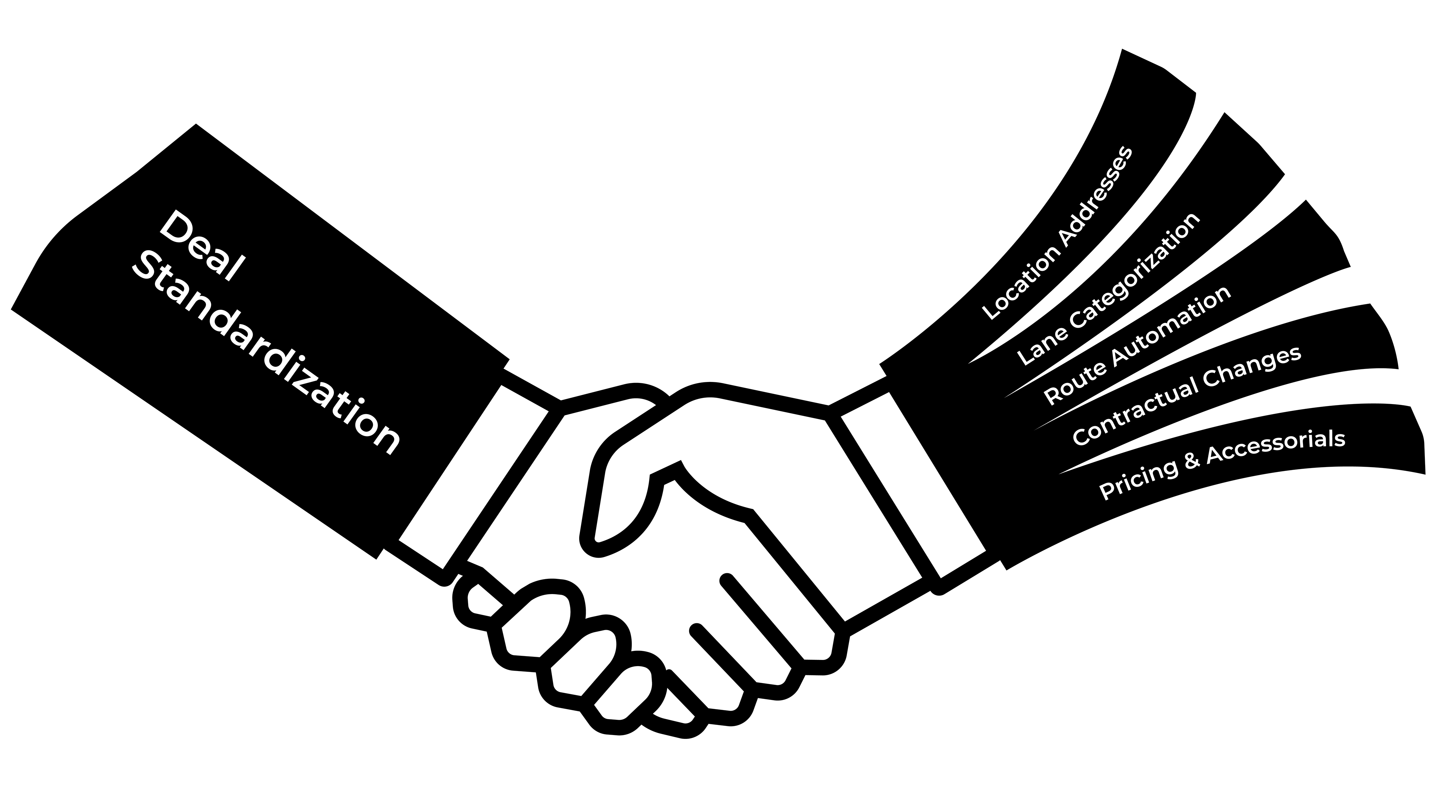
    To play our part in the standardization of the digital freight space, NEXT has launched our Deal Standardization Service to streamline the ingestion of critical contractual-level information across multiple systems (e.g. Salesforce) and distribute it to various TMS systems via API during and after the deal negotiation. The goals of this service are to promote support for:

    • Systematic formatting of all physical address locations
    • Flexible, yet structured lanes by categorizing origin and destination addresses
    • Lane specification at the street level to enhance lane matching accuracy
    • Route automation based on lane-level factors
    • Adjustment of contractual changes
    • Tracking contractual changes and previous versioning
    • Filtering, sorting, and searching contractual information

    By standardizing the ingestion of this contractual information, intelligent systems can leverage the data for other smart workflows (i.e. automated pricing) or develop much better lane-level analytics for internal business decisions or customer quarterly business reviews. The service is available for all modes of transportation and also provides the ability to efficiently manage contracts across combined services such as Port Drayage → Transloading → OTR. 

    As the heart of the deal, standardized contractual information directly contributes to the accuracy of moving freight. By improving the way contractual information is ingested and shared, we’re also contributing  to fixing downstream  ‘fractures’ in the supply chain.

    At NEXT, we utilize the Deal Standardization Service to not only manage all contractual agreements for our shippers, but also as a key factor in our ability to automate our freight marketplace and contractual lane services with our carriers. More to come on this front soon.

    Curious to learn more about Deal Standardization? Drop us a note at info@nexttrucking.com.
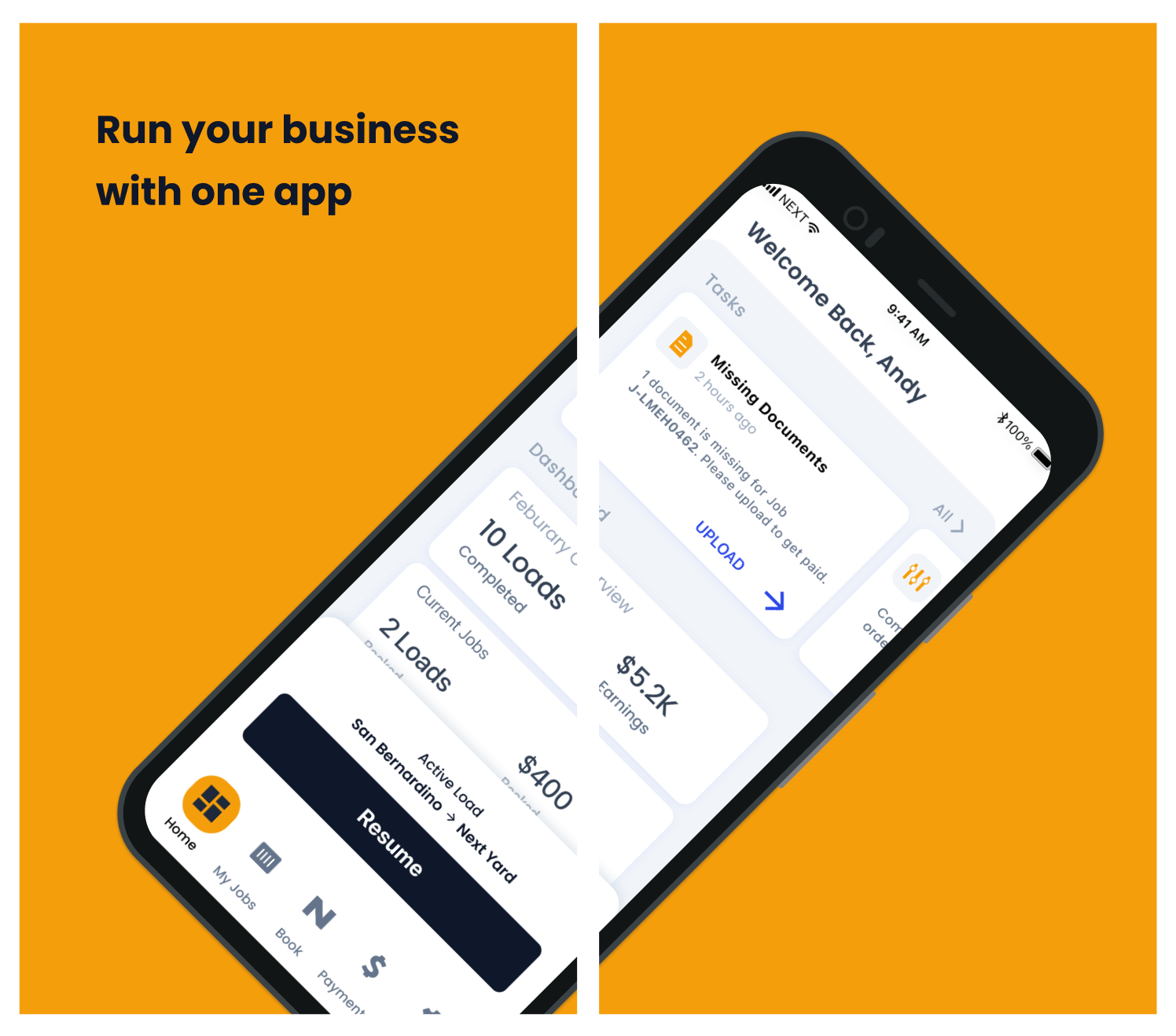
  • We’re ending the Summer with a splash of mobile app updates!

    We’re ending the Summer with a splash of mobile app updates!

    Back to school time often means new clothes and a new look, and our mobile app isn’t immune to a refresh.

    It’s not just a new welcome screen or brand colors to look a little more modern, we’ve added a ton of features recently to make it easier for Carriers to run their businesses. 

    Plus, we just released a splash of other new mobile app features!

    Now introducing…

    • Bottom app navigation to keep critical functions just a single tap away
    • Graypool capabilities to reduce operational friction for these types of loads
    • Live terminal cameras to increase Drivers’ visibility of traffic going in & out of the terminals

    We’re listening to our Carriers and delivering the technology they need to succeed.

    They deliver for us, so we’re here to do the same.

    Miss our last mobile app release?
    Click here to read about the new App Dashboard, Recommended Loads, and Terminal Maps available now in the NEXT mobile app.

    Want to learn more?
    Contact info@nexttrucking.com to schedule a Carrier mobile app demo. 

    Ready to haul loads with NEXT Trucking?
    Sign up
    here!

  • What is a Container Hold in Drayage?

    What is a Container Hold in Drayage?

    A hold is an intentional, mandatory breakage within the container drayage lifecycle made by U.S. Customs and Border Protection (CBP), the Steamship Line (SSL), or the Terminal. A Shipper must take urgent action to resolve the hold(s) associated with their container or risk having it rejected by CBP, blocked from being outgated by an SSL or Terminal, or stored in a way that accrues costly demurrage fees.

    Here are the different types of holds that can be placed on an import container:

    Customs HoldPlaced by U.S. Customs and Border Protection (CBP) – All containers imported into the U.S. from another country are subject to holds and exams by CBP to ensure compliance with U.S. laws and regulations. There are five hold types that CBP can issue for a container, which are often placed on containers before they arrive in the U.S. or during vessel discharge:

    1. Manifest Hold – This type of hold is placed on containers that have an incorrect manifest.
    2. Commercial Enforcement Hold – U.S. Customs is an auditor for other Federal Agencies, so this type of hold is placed on any containers not meeting FDA, USDA, CPSC, or other government agency standards.
    3. Statistical Validation Hold – This hold type is placed on containers that are randomly selected for ‘statistical’ verification of a manifested or reported commodity, its value, weight, and/or quantities. 
    4. CET Hold (A-TCET)Anti-Terrorism Contraband Enforcement Team – Any containers with dangerous cargo, such as guns or drugs, are placed under this hold type.
    5. PGA HoldParticipating Government Agencies – Agencies who regulate products entering the US can place on a container on this hold type to ensure it complies with U.S. product regulations.

    Freight HoldPlace by the Steamship Line (SSL) – This type of hold is for containers that have outstanding fees that need to be paid to the SSL before they will release the container. These could include demurrage, dwell fees, exam fees, etc.

    USDA HoldPlaced by CBP – This is a type of PGA hold that happens when the USDA flags the container for an exam to inspect the cargo inside the container.

    TMF HoldPlaced by the Terminal – This hold type is for containers that still require Pier Pass to be paid. Containers can still be scheduled for pickup at the Terminal, but the Driver will be turned away when they arrive if Pier Pass hasn’t been paid (resulting in a Dry Run).

    Unable to Locate (UTL) Placed by the Terminal – There are times when a container is effectively lost amongst the stacks, resulting in a UTL hold. A container will remain on UTL hold until the Terminal is able to locate the container, requiring Shippers to work with the Terminal to delay the container Last Free Day (LFD) or risk accruing demurrage.

    In a Closed AreaPlace by the Terminal – There are times when an area within a Terminal is closed temporarily (i.e. accident, vessel is discharging, etc). All containers within a closed area are unavailable for pickup until the Terminal opens the area back up. This often causes issues with scheduling pickup appointments, requiring Shippers to work with the Terminal to delay the container Last Free Day (LFD) or risk accruing demurrage.

    NEXT Trucking Provides Shippers with Hold Visibility via Actionable Holds Management and Proactive Notifications


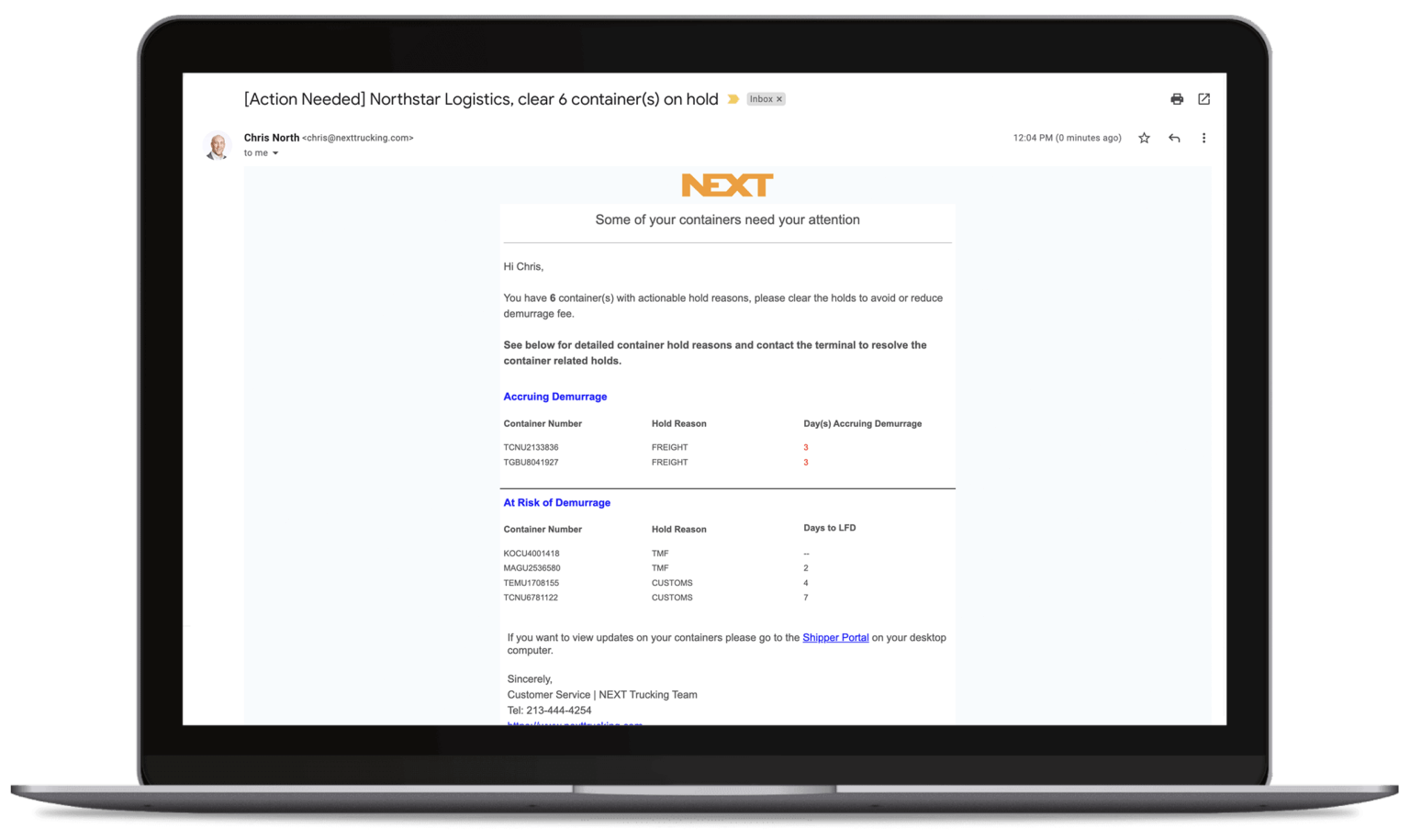
    As a part of our drive toward complete Drayage transparency, NEXT Trucking provides our Shippers with proactive container hold notifications and the ability to manage their container holds via the NEXT Shipper portal in real-time.
    Delivered to a Shipper’s inbox at 8:00 am PST every weekday, container hold notifications include critical hold alerts, information, and statuses for their containers. Within the NEXT Shipper portal, Shippers can see which containers have holds, how many holds each container has, and each type of hold placed on a container Shippers can also filter their containers by hold type to identify where bulk actioning might be needed.

    By providing consistent visibility into critical container alerts, information, and hold statuses, we’re helping Shippers proactively resolve any holds to prevent demurrage risk or fees.

    How are Holds Resolved?

    The process for resolving or “clearing” a hold is different for each hold type. Each entity placing a hold (CBP, SSL, Terminal) also has a separate process for clearing each different hold type. It is strongly recommended that you contact the entity that placed the hold on your container(s) to get it resolved as soon as possible:

    • Customs HoldsContact U.S. Customs & Border Protection
    • Freight HoldsContact the Steamship Line
    • TMF HoldsContact the Terminal
    • Unable to LocateContact the Terminal
    • In a Closed AreaContact the Terminal

    To learn more about Holds Management and Notifications from NEXT Trucking, check out our blog or contact us at info@nexttrucking.com.

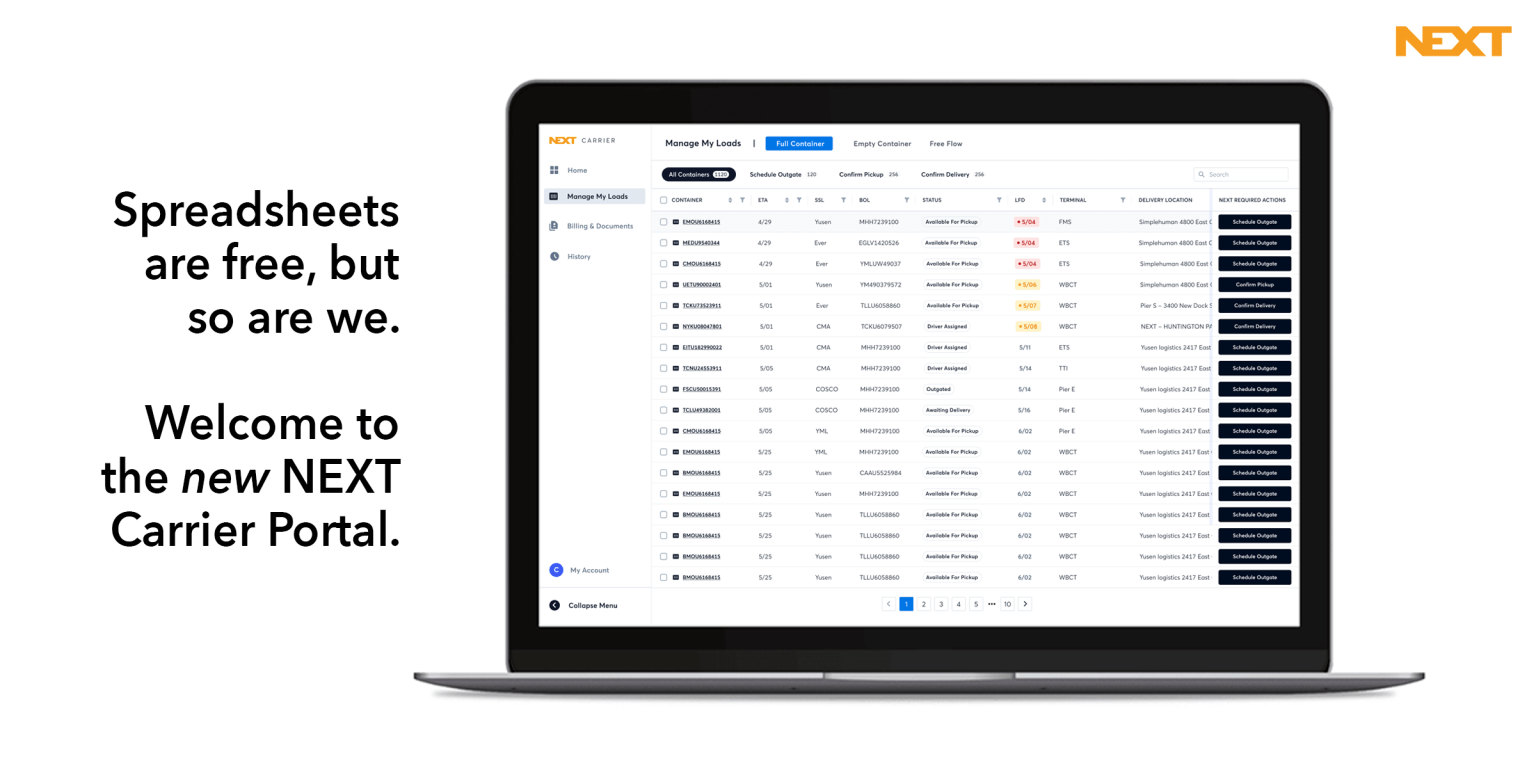
  • Everything spreadsheets do, we do a lot trucking better.

    Everything spreadsheets do, we do a lot trucking better.

    We spend a lot of time meeting with Carriers to understand how they operate and how we can serve them better. One of the biggest pain points across most small-to-medium Carriers (SMCs) is the lack of access to affordable, modern technology. Because of this, most SMCs heavily rely on “free” spreadsheet software like Microsoft Excel or Google Sheets to manage their business. 

    Unfortunately, the idea that spreadsheets are “free” and therefore not a cost-center for SMCs is a very common misconception. Sure, spreadsheet software is universally available, infinitely customizable, and incredibly simple to use, but, they require endless hours of manual data entry and constant updating, provide no stakeholder accountability, and are prone to human error. 

    Most Carriers leveraging “free” spreadsheets find themselves managing 8+ spreadsheets and are burdened with inefficiencies. What’s more, managing multiple spreadsheets is actually increasing labor costs, lowering employee productivity, and siloing information. 

    Instead of being “free”, spreadsheets actually increase SMCs costs without them even realizing it. So, what’s being done about this?

    We’ve revamped the NEXT Drayage Carrier portal to do everything spreadsheets do, but a lot trucking better:

    • Quickly assign or reassign Drivers on the fly to keep your loads moving
    • Rapidly access thousands of Traditional & Free Flow container loads
    • Proactively dispatch your Drivers days in advance
    • Dramatically increase back office efficiency by eliminating check-calls and manual document scanning
    • Easily scan reporting for pending payments, past payments, missing or rejected documents, and missing invoices.

    Know what else is great? The NEXT Drayage Carrier Portal is actually free and helping many SMCs drive down their overhead costs. The SMCs who have already adopted the portal are seeing increased back-office productivity, increased operational efficiencies, and a decrease in employee overtime costs. 

    By giving Fleet Managers and Dispatchers the ability to easily manage the container lifecycle in just a few clicks, their team can operate in real-time without increasing overhead costs, taking an SMC’s Drayage business to the next level.

  • Get rolling this Summer with Recommended Loads, Terminal Maps, and more!

    Get rolling this Summer with Recommended Loads, Terminal Maps, and more!

    We’ve spent the last few months working with our Carriers to develop several great mobile features that we guarantee will make moving container loads easier, just in time for Summer. Suggested by Carriers and built for Carriers, check out a couple of the newest features we released today and stay tuned for more coming soon!

    App Dashboard


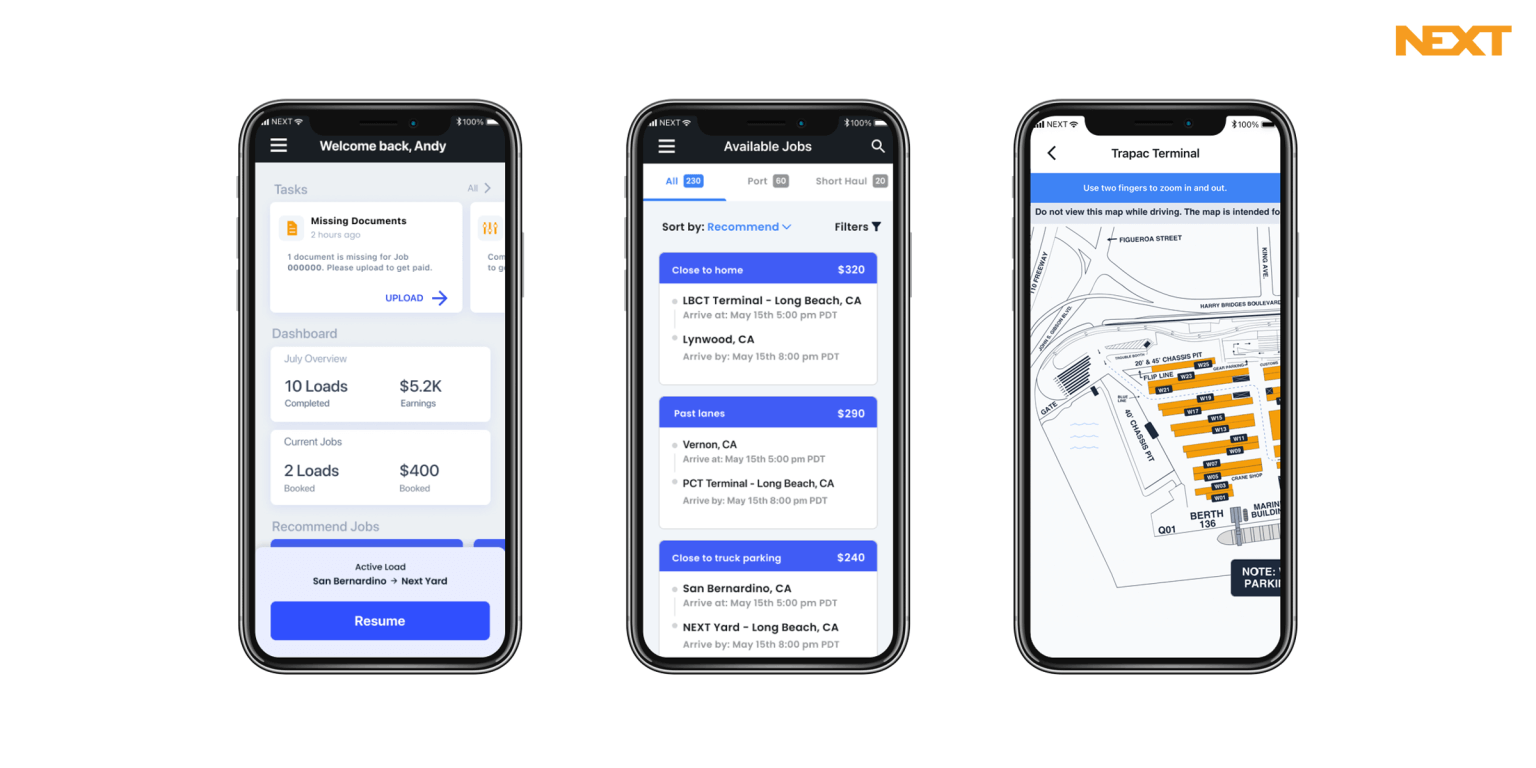
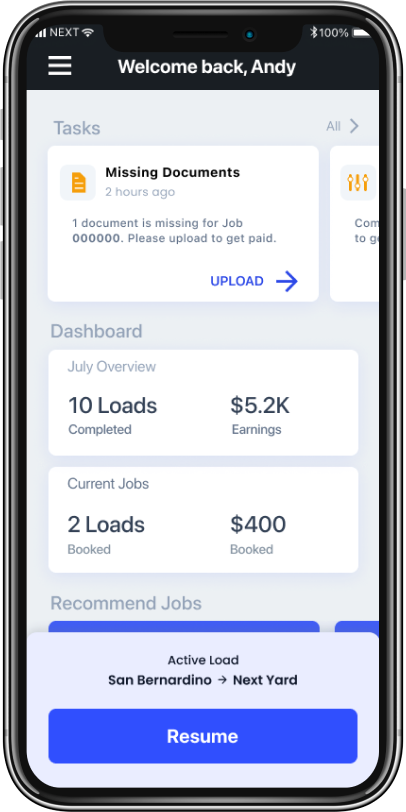
    The new app Dashboard provides 1-tap access to the most essential parts of managing Jobs on the NEXT mobile app, with urgent items prioritized for quick actioning.

    • Tasks show the loads that are missing documents or need to be invoiced. We put these reminders front and center for them to complete and get paid.
    • Dashboard shows a Monthly Overview of completed loads and total earnings for the current month. It also includes Current Loads, which shows the number of loads booked and the total linehaul earning potential from completing those loads.
    • Recommended Jobs show the available Jobs that are tailored to the user’s specific load preferences. Swiping left or right lets them browse the recommended Jobs. Clicking on a Job lets them review the load details before deciding to book.

    Recommended Jobs


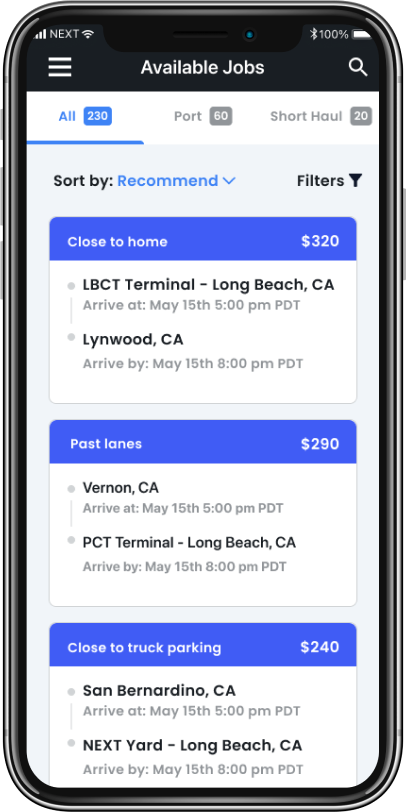
    Carriers asked and we delivered. Recommended Jobs are now the marketplace “Sort By” default in the Available Jobs list. This means Dispatchers and Owner Operators will automatically see the bookable loads that matter most to them, categorized by:

    • Past Lanes
    • Time of Day
    • Close to Home
    • Close to Truck Parking

    To take full advantage of Recommended Jobs, users should navigate to the app menu, tap Load Preferences, and add their personalized criteria including:

    • Preferred Load Type
    • Maximum Weight Capacity
    • Truck Parking Location
    • Working Schedule
    • Saved Preferred Lanes

    Terminal Maps

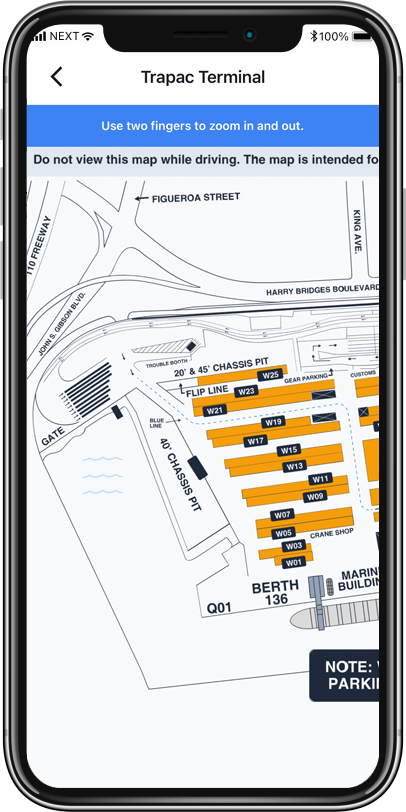
    No more driving in circles trying to find a container location!

    NEXT Trucking is the first to offer in-app maps to help Drivers navigate through the Los Angeles & Long Beach terminals. Each booked load automatically includes the designated terminal map, so Drivers can easily zoom in & out and move the map to quickly find a container location. Terminal maps are available for both Owner Operators and Fleet Drivers using the NEXT mobile app.

    A personalized mobile Dashboard, Recommended Jobs, and Terminal Maps… these are just a few ways NEXT is working to make Drayage easier.

  • Container Holds Management and Notifications for Shippers

    Container Holds Management and Notifications for Shippers

    Shippers, Ports, and Terminals are all working together to build transparency. However, we’re not at a point where the end-to-end solution exists (yet). To help our Shippers understand their risk of fees, we’re adding transparency to the container milestones our Shippers care about the most.

    As a part of our drive toward complete Drayage transparency, NEXT now provides Shippers with Container Holds Management and Notifications

    Starting today, all Drayage Shippers will receive Container Hold Notifications delivered to their inbox at 8:00 am PST every weekday. Within the NEXT Shipper portal, users can also see which of their containers have holds (along with the number and type of holds placed on a container). Shippers can also filter their containers by hold type.

    By gaining consistent visibility into critical container milestones, information, and hold statuses, we’re creating an environment where Shippers can proactively clear any holds to prevent demurrage risk or fees.

  • Increasing Delivery Order Options for Shippers

    Increasing Delivery Order Options for Shippers

    The last few years have required Shippers to increase the number of Carriers they work with. In lockstep, this has often meant accepting new workflows to mitigate the risk of errors. Said differently, every time a Shipper begins working with a new Carrier, that Shipper needs to revise or add another workflow into their day-to-day operations. 

    It’s untenable. It’s unscalable. And it’s rife with errors. 

    To alleviate these issues, we’ve recently expanded the ways in which we can accept Delivery Orders, to more easily align with the way our Shippers operate.  Our most recent enhancement simplifies the DO submission process for all of our Shippers by allowing automated DO ingestion via CSV file in the NEXT Shipper portal.

    This is not meant to replace EDI or API Delivery Order ingestion that is already established. Instead, it is built for the Shippers who still use spreadsheets (and perhaps haven’t migrated to an EDI or API approach yet) and need the flexibility to submit, monitor, and manage their DOs on their own schedule.

    The NEXT DO CSV template can be easily populated from the spreadsheets Shippers are already using. Better yet, a single CSV file can be used to push hundreds of containers across multiple MBOLs to NEXT, saving countless hours of manual data entry and having to create multiple Delivery Order documents.

    Once uploaded into the Shipper portal, the CSV file is also the single source of truth for the container shipments, helping to prevent any downstream errors. As always, Shippers receive complete transparency into the approval status of the Delivery Order. Once approved, all container shipments are automatically created and available with their current terminal status on the “Your Containers” page for visibility and tracking.

    We love to help our Shippers get to the next level in their business and see CSV file ingestion for Delivery Orders as an automation starter kit, laying the groundwork for a Shipper’s likely shift to EDI (or API) as they grow.

  • Introducing NEXT’s College Scholarship Fund

    Introducing NEXT’s College Scholarship Fund

    “I do this for my kids” is one of the most common reasons truckers tell us they’re on the road moving goods. Yet, at the same time, the only cost rising faster than diesel lately has been the cost of college tuition. 

    So, we’d like to help. 

    Last week, at the Harbor Trucking Association’s DrayTech event, we announced a $10,000 scholarship fund aimed at helping a driver’s immediate family member pay for college. 

    We’re dedicated to helping drivers and their families find economic opportunities. In fact, it’s in our new corporate vision: To create economic opportunity through intelligent, frictionless, and sustainable supply chains. 

    Simply click on this Google Form and fill out the relevant information to apply. A panel of NEXT employees from HR, Marketing, and our Executive Team will review all applications and invite a small group of applicants to interview. 

    Please fill out the entire form; partial submissions will not be accepted. 

    ***Drivers themselves are also eligible for the scholarship. If an active driver is going to school while also being a driver, we’d encourage them to apply as well. 

  • Introducing our NEXTpedited Services

    Introducing our NEXTpedited Services

    This morning, NEXT Trucking introduced a program that we’ve been running as a closed pilot. We’re calling it our NEXTpedited Service, and the idea behind it is to remove friction from drayage.

    We partner with steamship lines to influence how containers are stowed at the point of origin, making it easier for terminals to unload containers and create multiple peel piles, grouped by shipper or a common/nearby destination. From there, we offer drivers the ability to pick up containers from the peel piles with appointments.

    Containers are delivered, and we ask our shippers for either live-unload, or a one-day drop and hook. This allows drivers to complete three to four round trips to the port each day (taking a recently unloaded empty back for dual transaction purposes), generally using the same chassis they arrive with for the next container they carry.

    The process is removing around three weeks from the typical time it takes a shipper to get access to their goods. In addition, it’s focused on eliminating demurrage and detention for our shippers.

    NEXTPedited is still running as a pilot program, but we regularly add new shippers to our program.

    If you’re a shipper who’d like to be considered for entry into the program, or a driver who’s interested in faster turns at the port, please send a note to info@nexttrucking.com.

  • Introducing Lane Preferences: An Easier Way for Carriers to Find, Book, and Save the Lanes They Love

    Introducing Lane Preferences: An Easier Way for Carriers to Find, Book, and Save the Lanes They Love

    Carriers often find themselves scrolling through load apps, passing over loads that either don’t fit their schedules, or in lanes they’re not interested in. It can be frustrating when there are dozens of available loads in an app, but few to none are in lanes the Carrier is actually want. This makes it very difficult to fill a workday using one source for loads – so Carriers are forced to try 3-5 different apps and brokers to fill their daily schedules. 

    NEXT’s new feature “Lane Preferences” solves these problems by introducing a lane preference filter so that Carriers can search, book, and save the lanes that fit their needs, goals, and work preferences. No more scrolling endlessly to find the one load a Carrier likes in a heap of dozens. No more having to pick up a load in a lane that doesn’t fit a Carriers needs. Along with NEXT’s existing filters like date, mode, trailer type, etc. – with Lane Preferences, Carriers will be able to filter by starting point and destination, so that every load presented is perfectly matched to the Carriers needs. 

    “Our goal with Lane Preferences is to simplify the load search experience for Carriers so that they don’t have to sift through 3-4 different apps to fill their work day,” says Derek Marcial, the Product lead for this release. “Lane Preferences helps Carriers filter out the noise by empowering them to filter out loads they don’t want, so they can see just the loads that fit their lifestyles.”  

    To try out the new Lane Preferences filter, Carriers simply need to open the NEXT mobile app, tap the filter icon, and select “Lane Preferences.” From here, they’ll be able to select a starting location, end location and a mile range between each so that only loads that fit that criteria are shown. For Carriers who don’t already have the NEXT mobile app, they can download the app for iOS or Android by visiting either of the app stores and searching “NEXT Trucking.”