Author: admin

  • NEXT Celebrates National Truck Driver Appreciation Week

    NEXT Celebrates National Truck Driver Appreciation Week

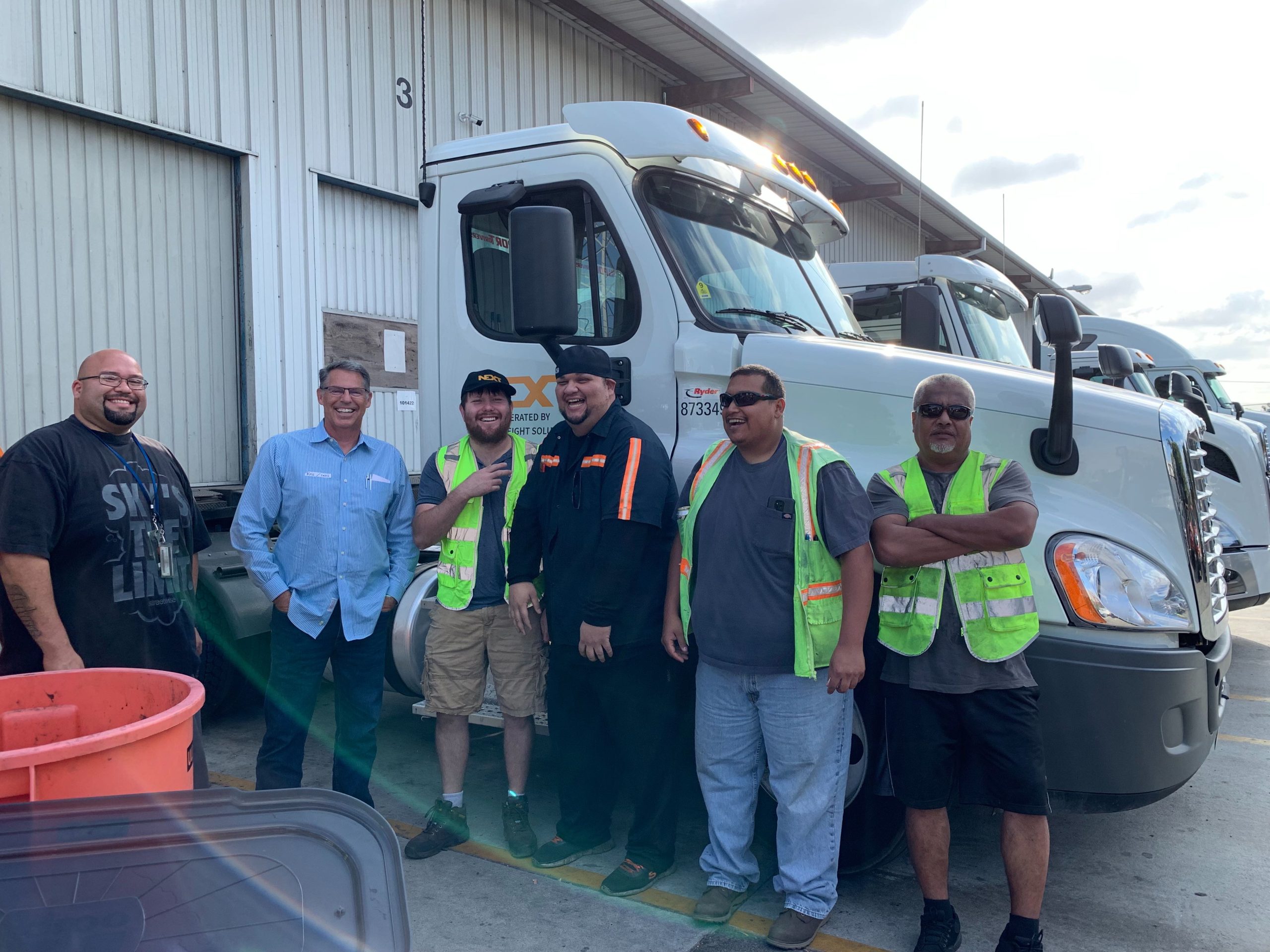
    At NEXT, we pride ourselves on always putting #DriversFirst and what better way to show support than during National Truck Driver Appreciation Week.

    During the week of September 9-13, we offered a series of events and discounts for asset drivers and owner operators.

    “Mo’ Money” Monday was a chance for drivers to win a $50 bonus gift card when booking a load through the app.

    For Taco Tuesday, we provided drivers at our Gardena yard and the Port of Long Beach free tacos!

    For “Win-It” Wednesday, we gave away flat screen TVs to some of our dedicated owner operators and asset drivers.

    On “Thank You” Thursday, we partnered with Harbor Truck Stop to offer $20 truck washes. NEXT team members also wrote personal thank you cards to drivers and asset drivers received their own business cards.

    To round out the week, on “Fill-It-Up” Friday, we again partnered with Harbor Truck Wash to offer drivers a gas discount and also provided drivers with NEXT backpacks.

    We’re incredibly proud of our trucking family and relished in this opportunity to show our appreciation. NEXT is working hard every day to create products and technology solutions that improve the lives of truckers and increase earning opportunities!


    IMG_5032


    Image from iOS (7)


    6627A065-9501-487A-9433-383DBA7AA2C8


    Image from iOS (12)


    Image from iOS (8)


    IMG_0798

    Image from iOS


    20190913_124718


    Image from iOS (6)


    Image from iOS (5)


  • Q&A: Using Data to Drive Port Efficiencies

    Q&A: Using Data to Drive Port Efficiencies

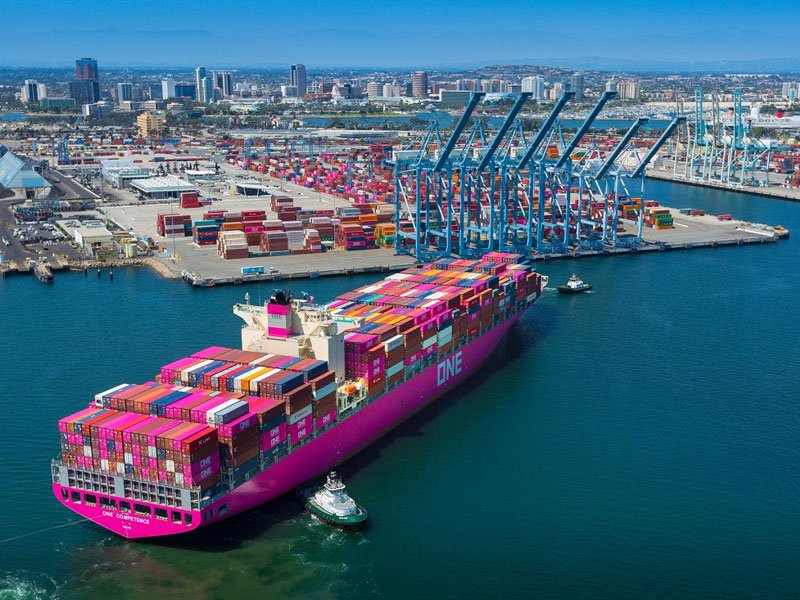
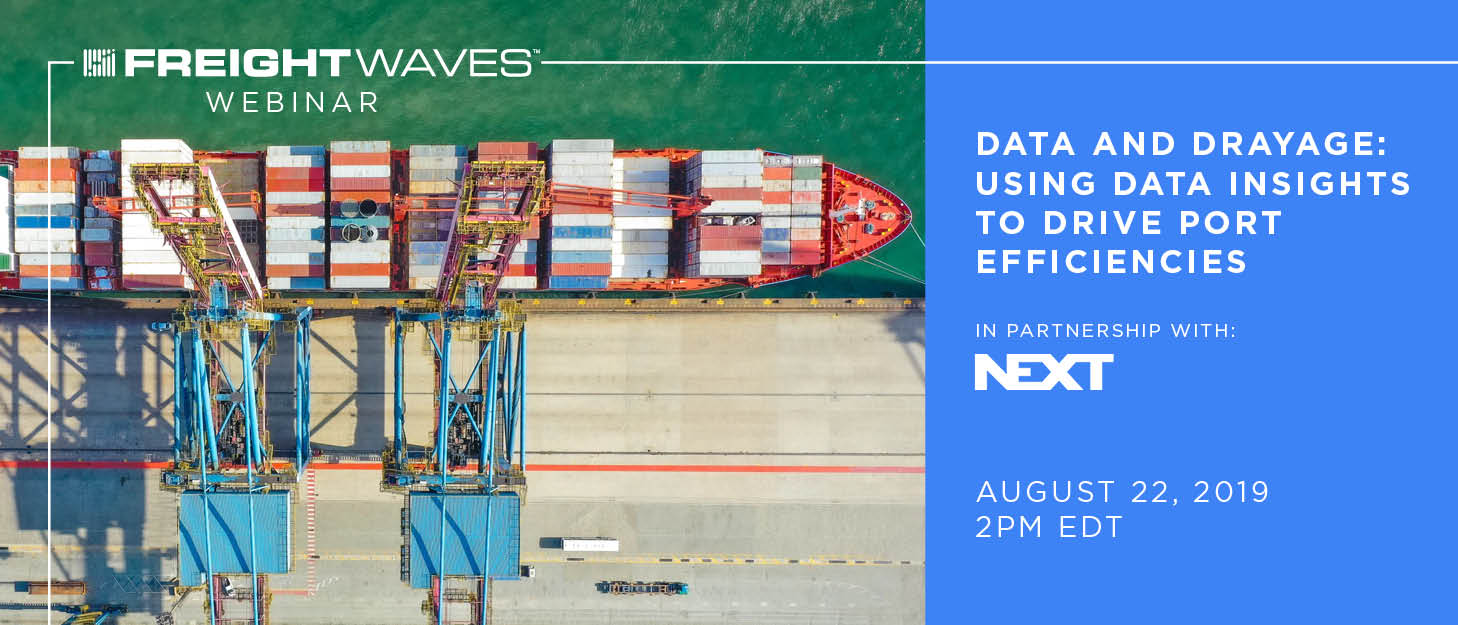
    Earlier this month, NEXT partnered with FreightWaves for an informative webinar on the importance of using data insights to drive port efficiencies.

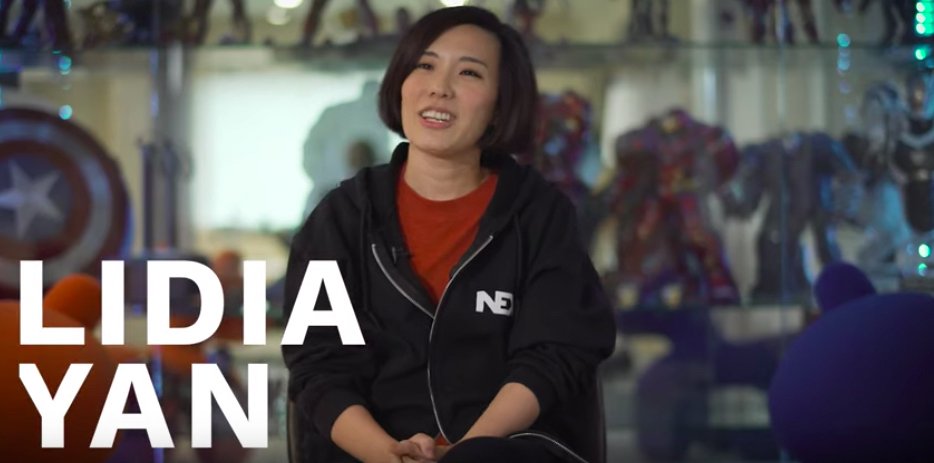
    The webinar includes insights from NEXT CEO Lidia Yan, CRO Bobby Napiltonia and Henry Byers of FreightWaves. During a live Q & A, participants were able to send live questions to the panel. We’ve compiled some of those questions and answers below.


    long-beach-one-ship


    Talk about what role you think the other “data consortiums (like the Maersk/IBM one) play with what Next is doing drayage. How do you see them working together?

    Bobby: Great question. They’re definitely on our list to reach out to because they are both companies who are dominant players and have been around probably 100 years each, and we want to work with them like any providers to ensure there’s open transparency with data and information that we can roll out. We are come one, come all when it comes to data sharing, but then there are also perspectives that if you build great televisions, or you build great microwaves or refrigerators, you probably shouldn’t be in the data business. We believe there’s a time and place for everyone and that’s why we at NEXT are maniacally focused on truckers first and that makes the BCOs happy and then we are creating a new norm, which is data sharing and openness for all. And by doing that, we know we’ll win.

    Ports and terminals with air quality improvement goals are increasingly trying to upgrade the drayage fleets that serve them, through cost-sharing for truck replacement, and/or mandating more recent engine models. Can NEXT gather and share any info on the trucks using the system, to enable drivers to take advantage of financial support for upgrading their trucks, or expedite approval for entry at locations where old trucks are banned?

    Bobby: Yes, the ports are putting in mandates and they are really around a clean air bill act and what we’re seeing is that ports are using different systems, but all with the same goal. We at NEXT are all about having a clean port and what we’ve found is that most if not all drivers won’t actually be able to purchase new vehicles. We’ve recently invested in a piece of property close the LA ports and we have a product we offer called RELAY and this allows NEXT, who has invested significantly in about 100 trucks to pull those cans offsite, so that any driver that may not have a truck that’s port accessible can still earn a living by picking up loads that don’t require them to have the vehicle being mandated. We’re really investing in making sure they can continue having their life and my personal hope is that it follows the trends of the technology industry spills over into this industry where it appears we’re treating truckers unfairly today.


    portoflongbeach


    Do you foresee ocean containers ever having GPS tracking to help with tracking and tracing of our shipments?

    Henry: Absolutely. It’s one of the biggest issues facing the ocean container industry. Currently, from a shipper’s perspective — they need to understand where their containers are and sure, you can track the vessel, bur being able to see it once it gets off the vessel — you just lose so much visibility of the container when it moves off that ship and into the terminal. I think from an asset management point of view in the steamship lines, it’s going to be critical to identify where these containers are at all times.


    chassis 10_0


    Question about chassis: What have you implemented to increase the availability of chassis and reduce the time to obtain a chassis at the port? Have these efforts had a big impact on turn time?

    Bobby: I refer to it as “The Chassis Catastrophe” because I’ve never seen anything like it. Rickshaws in third world countries are run better than the chassis in the port here. At NEXT, we’ve invested and now have just under a thousand chassis and we’re partnering with smart chassis companies that have digital tracking systems because we’re trying to figure out what the best chassis is. We are working with the chassis companies and the port to help them advance it in a way that makes it more fluid than any other industry in the world.


    Trucks-Low-Angle-e1442351055164


    This question is for Lidia: Bobby mentioned the automation of ports and I was curious if you could speak to the role or opportunity of autonomous trucks in the Drayage market? Especially as autonomous ports become more prevalent globally. How would Next interact with these technologies in the future?

    Lidia: We’re a technology company, so we do love technology and we actually initiated conversations with autonomous truck manufacturers in the past to understand their pace and where they are. It seems like the technology probably requires a little more time. We’re looking at probably five years and the biggest hurdle is probably government and regulations. Right now, autonomous trucks can only be operated in Arizona and Florida, I believe. Ports are relatively more complicated. I don’t know if any of our audience has a Tesla, but you can drive on the freeway with confidence on autopilot, but local traffic and local conditions are very, very different, especially when it comes to terminals. And also, every terminal is different, so that adds more complexity. In five years autonomous trucks will be operating mostly for long haul and NEXT will be interested in working with them, even though we’re a trucker-centric marketplace and empower truck drivers because we believe autonomous trucks will really alleviate burdens for long haul truck drivers. They can drive more hours and take a break whenever they need to, but it will take more time for these trucks to come into the terminals considering the technology limitations at this point. The average truck driver age right now is over 50-years-old, so in ten years we will lose drivers. We believe with the implementation and maturity of autonomous trucks, we’ll get more capacity from the industry, while those autonomous trucks can empower drivers to be more efficient, make more money and of course the priority when I talk to those manufacturers is… you guys need to make a truck affordable for drivers because they are the true entrepreneurs and they keep our economy moving and we want to give them the technology and empower them to have a better life.

  • Webinar: Let’s Talk Data + Drayage!

    Webinar: Let’s Talk Data + Drayage!

    Yesterday, NEXT partnered with FreightWaves to talk about the importance of using data insights to drive port efficiencies.

    Data sharing can enable companies to intervene at key points in the drayage process to ensure optimal visibility. The webinar is full of insights from NEXT CEO Lidia Yan, CRO Bobby Napiltonia and FreightWaves data guru Henry Byers. Topics include:

    • Key areas of friction and inefficiency in drayage
    • Ways to streamline processes within steamship lines, ports, terminals, etc.
    • How to achieve greater consistency and visibility for better tracking to avoid delays and missed appointments.


  • NEXT Opens New El Segundo Headquarters

    NEXT Opens New El Segundo Headquarters

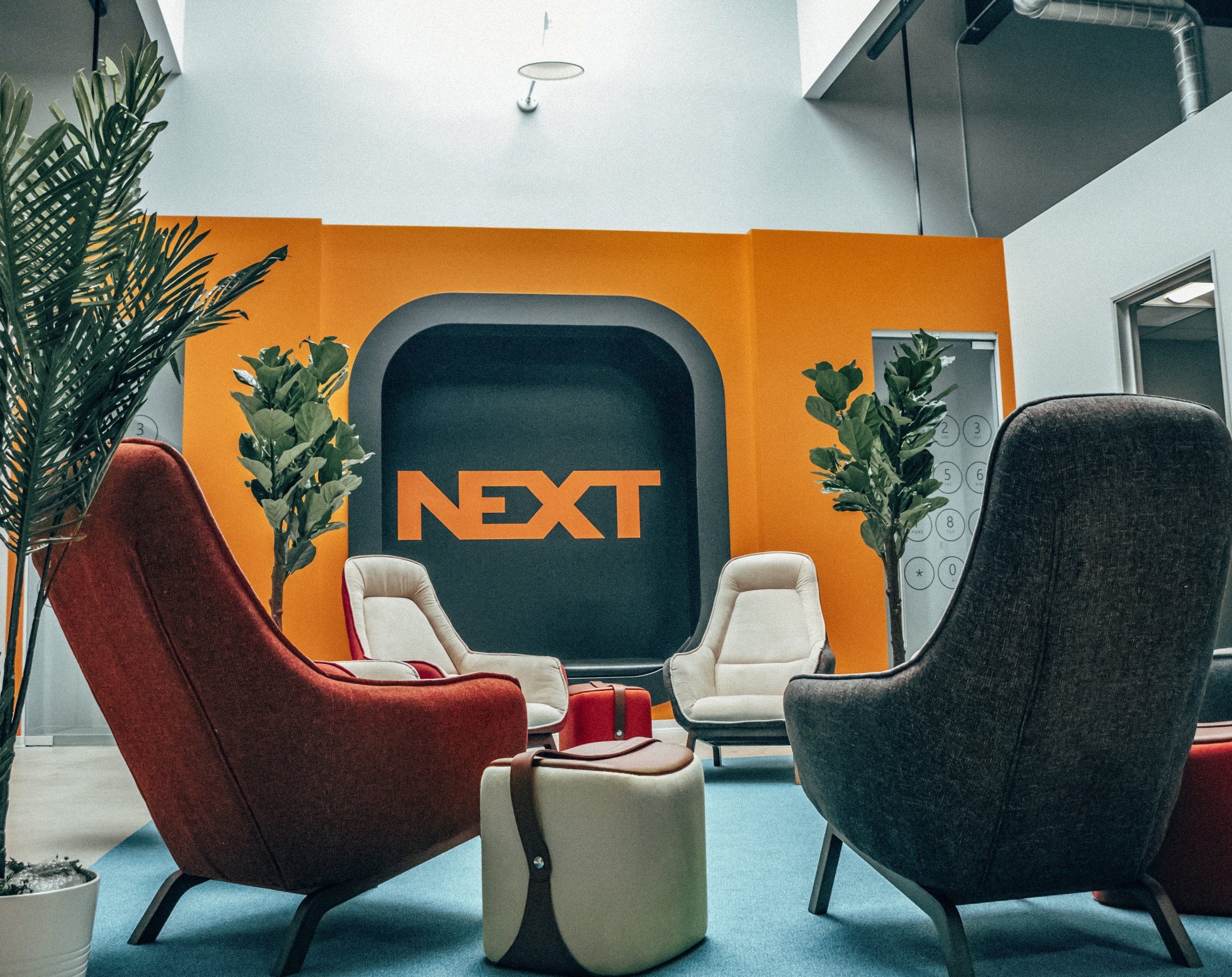
    Today, NEXT officially opened its new headquarters in the heart of Silicon Beach. The new space, a 25,000 Sq. Ft. facility, will support increased headcount as NEXT rapidly scales its operations.

    NEXT-July-22-19-67

    “El Segundo is the Southern California hub for innovation, Where Big Ideas Take Off! We are home to the world’s most innovative companies in media, aerospace, sports, entertainment, e-commerce, foods and biomed, so NEXT will be in great company,” said Drew Boyles, Mayor of El Segundo. “NEXT has been tremendously successful, and we’re thrilled to welcome the company to our community as it ushers in its next growth phase.”

    NEXT was founded in 2015 as a trucker-centric marketplace, connecting drivers with many of the largest shippers in the world. The company increases transparency throughout the supply chain with simple to use technology. Propelled by venture capital from industry leaders such as Brookfield Growth Partners and Sequoia Capital, the company will have more than 250 employees by the end of 2019.

    NEXT-July-22-19-68

    “For the last four years, NEXT has empowered our drivers to work when they want, the way they want, as a way to truly improve their quality of life,” said Lidia Yan, CEO of NEXT Trucking. “Our model is proven, and we’re now providing our employees with a space that can facilitate further rapid growth.”

    “This exciting development reflects NEXT’s dedication and commitment to solving the trucking industry’s most pressing challenges through technology,” said Josh Raffaelli, Managing Director of Brookfield Growth Partners. “We are pleased to support the NEXT team’s vision as it executes on its growth strategy.”

    IMG_9432

    NEXT’s new headquarters, located on Utah Ave, is part of a six-building campus and boasts several employee-centric amenities, such as an outdoor patio, an on-site gym, and cold brew coffee and kombucha on tap.

    NEXT-July-22-19-92
    IMG_9491
    IMG_9478
  • NEXT Featured In Forbes Next Billion-Dollar Startups

    NEXT Featured In Forbes Next Billion-Dollar Startups

    NEXT is thrilled to be included in the 2019 Forbes Next Billion-Dollar Startups! Along with a feature profile, NEXT Co-Founder and CEO Lidia Yan also sat down with the Forbes team for a closer look at the drayage industry and its vital role to the overall supply chain. The video showcases the unique approach NEXT is taking to transform and streamline the $60B drayage market.

    WATCH the entire video here.

  • Product Update: More Roundtrip Loads, Less Deadhead

    Product Update: More Roundtrip Loads, Less Deadhead

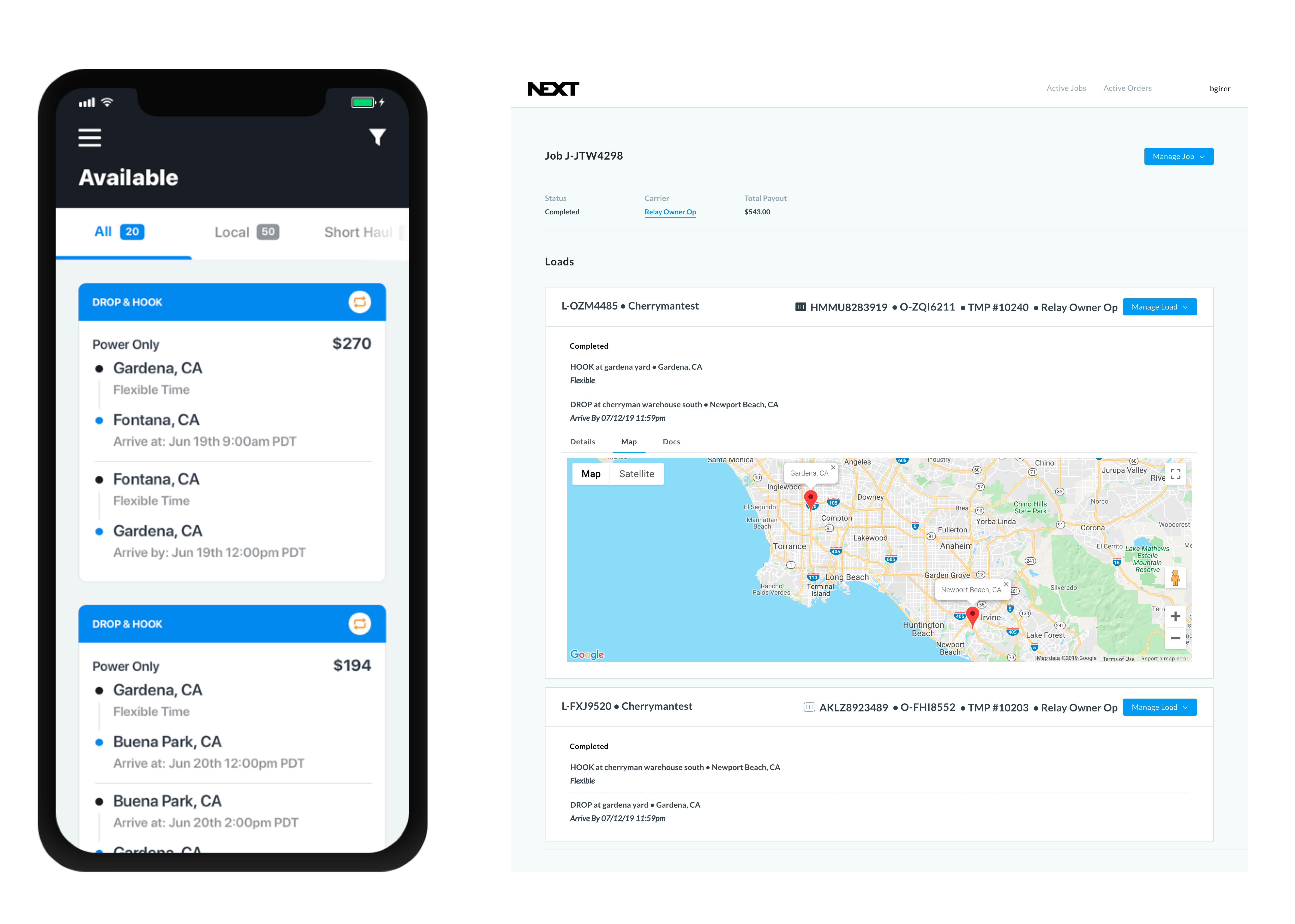
    NEXT has begun rolling out a route-bundling service that allows carriers to easily book roundtrip jobs with the aim to reduce deadhead and more efficiently manage empty miles. The more streamlined feature now gives carriers the peace of mind of knowing that when they book a job going out, they’ll have another one coming back.

    Our mission is to empower truck drivers to work when they want, how they want. We understand finding consistent, reliable work can be challenging and that’s at the heart of this new product feature. We believe carriers shouldn’t have to drive far to earn more.

    In addition to more local loads, the direct result of this enhancement is that drivers and fleet managers can more efficiently manage empty miles, and increase earnings potential. We want to give drivers more opportunities to find and book loads closer to home, with multiple roundtrips replacing the need for long overnight and out of state hauls far away from home and family.

    We’ve spent countless hours with our users conducting focus groups and feedback sessions to figure out how to solve the most pressing issues for truckers. Round trip bundling capabilities have been built in response to the feedback we’ve received from our drivers. Predictability, both in terms of earnings potential and knowing where a driver will be on a given day have been identified as critical in our research, so we’re addressing those head-on.

    Less empty miles, more time with family.

    Book more local loads in the NEXT Trucking app today.

  • DrayTECH 2019 – That’s a Wrap!

    DrayTECH 2019 – That’s a Wrap!

    HTA 6.26.19-5711


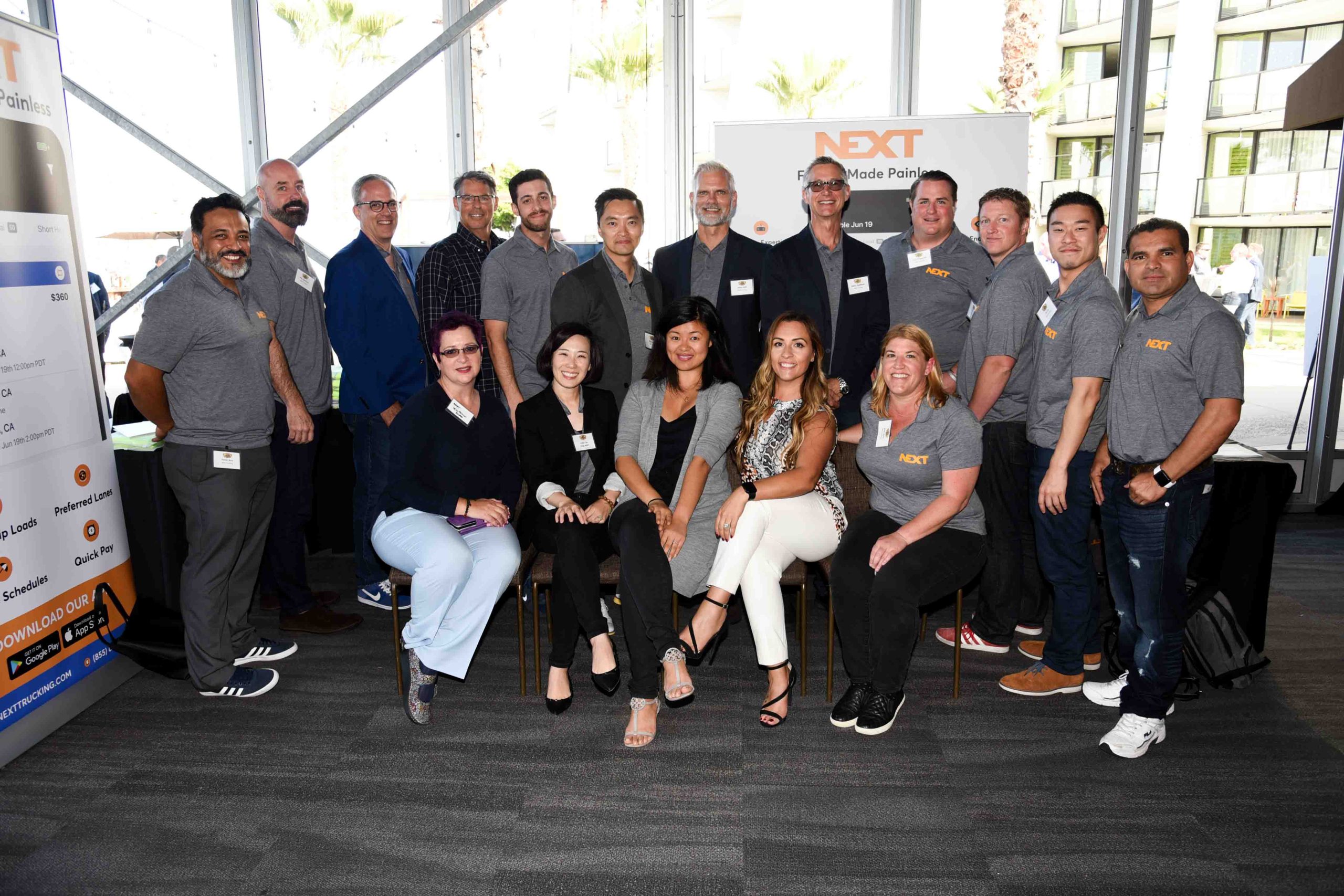
    On Wednesday June 26th, the third annual Harbor Trucking Association DrayTECH conference took place at the scenic waterfront Hotel Maya in Long Beach. This year, NEXT stepped in as the title sponsor of the event, which attracts a number of freight companies, panelists, truck drivers and sponsors all with a vested interest in solving some of the most complex issues surrounding drayage.

    IMG_8430


    The event kicked off with a panel on CleanTech, featuring representatives from XOS Trucks, Clean Energy and Crossroads Finance. An afternoon panel discussed the issues of equipment visibility and tracking technology, with an emphasis on the ongoing pain point of chassis availability at the ports, especially during peak season.

    LA Metro held a breakout session on how to improve the LA county freight transportation system. Overall, LA Metro is looking to play a bigger role in logistics (their original charter is to support transportation of goods and people throughout LA). They are also looking to change their relationship with truck drivers, which has been strained in the past. To change that, they are accepting input from a large number of sources. The discussion then turned to natural gas and EVs — with companies like Edison and PG&E offering massive discounts through state programs ($100k+). Two carriers in attendance who have purchased EVs talked about how the trucks are literally sitting in a yard because there are no chargers powerful enough to charge the vehicles within driving distance. Clean trucking continues to be a hot topic, and one with many different perspectives.

    HTA 6.26.19-5411 (1)


    The afternoon session concluded with representatives from the Port of Los Angeles, Port of Long Beach, Northwest Seaport Alliance, Port of Oakland and LA Metro discussing the state of affairs and the role of the public sector in 21st century port operations.

    Before the final panel of the evening, guests enjoyed cocktails, hor’dourves and some beautiful SoCal sunshine outside the venue facing the Long Beach waterfront.

    HTA 6.26.19-5730

    The evening concluded with Freightwaves introducing NEXT Chief Revenue Officer Bobby Napiltonia, (who brought down the house) with his discussion on the “New Norm” in the freight industry.

    ”We believe we’re due for a makeover. If you don’t, you should probably go home because there won’t be a place here for you tomorrow.”

    HTA 6.26.19-5770


    “Transforming freight starts with drayage. It’s like a dance and if you stumble from the start, you fail.”

    NEXT Co-Founder and CEO Lidia Yan took to the stage to reinforce the importance of the first mile and the need for change.

    “We wanted to be the first technology company to really disrupt, change and resolve the problems that have existed for so many years.

    By combining our virtual fleet and freight marketplace with owned yards/assets, we are able to increase truck turns and container moves resulting in faster deliveries for shippers and greater earning potential for drivers.”

    IMG_8695


    Both Napiltonia and Yan echoed that change begins with reimagining the current business model and forming partnerships to share data and work collectively to bring more transparency to the industry.


    HTA 6.26.19-5814


    Harbor Trucking Association CEO Weston LaBar agrees and has long been an advocate for technology advancements in drayage operations.

    “Technology will be what drives our industry, both literally and figuratively. We need to embrace sharing data and leveraging technology to provide visibility and accountability for cargo-owners. Gone are the days that progress in drayage will be decided by the slowest adopters. They need to get on board or be left behind. Together, HTA, NEXT, and other forward thinkers will lead our industry into a new industrial revolution that is driven by advanced technology. Viva La Revolution!”

    In other words, hold on tight. Change is coming.

  • NEXT Will Add New 18-Acre Drayage Yard in Long Beach

    NEXT Will Add New 18-Acre Drayage Yard in Long Beach

    port_of_long_beach_study_800_536_84_c1


    Doubling Down on Drayage

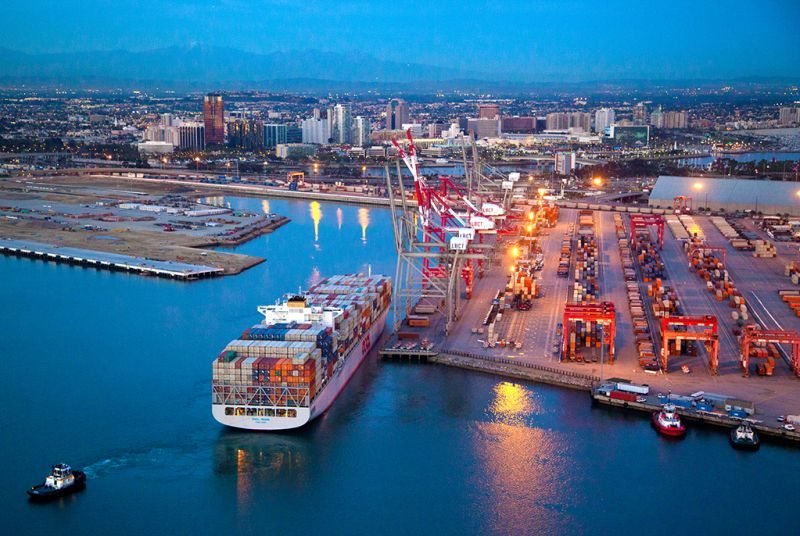
    At this year’s Harbor Trucking Association DrayTECH event, we are announcing an agreement to open a massive new 18-acre drayage yard, just 15 minutes away from where container ships dock. Forgive the pun, but we viewed the yard as a crucial piece of “beachfront property” that helps us further implement our Relay program.

    To put that 18-acres in perspective, our new yard now has the capacity to handle shipments of more than 400,000 espresso machines or 210,000 electric scooters each day. You’d need that many scooters to handle that much caffeine.

    When we launched Relay last year, the idea was to create a method for alleviating congestion at the ports. Our aim was to give port truck drivers the opportunity to make more money from increased loads and quicker turn times every day. The domino effect of a successful Relay program also means shippers get their containers offloaded and through customs more rapidly, and onto the final destination.

    So far, Relay has delivered on the promises we believed it would. Drivers working with us are seeing their incomes increase by up to 50 percent, while our shippers are seeing over 150 percent more containers pulled daily. This growth has all been achieved with an 8-acre yard in Gardena, CA, which is further away from the ports—imagine what will be possible for our customers with our new yard.

    The new Long Beach yard is a logical extension of our approach and will increase our capacity to uplevel Relay’s efficiency on an even larger scale.


  • No B.S. Answers To Your Most Asked Drayage Questions

    No B.S. Answers To Your Most Asked Drayage Questions

    Drayage and the entire supply chain industry are poised to enter an exciting new era fueled by digitization. A future of faster, cost-effective, improved efficiency is well within sight yet, many questions need addressing. We sat down with Weston LaBar, CEO of the Harbor Trucking Association, to get his straightforward answers to the questions those with a vested interest in drayage should be asking.

    What are three changes the drayage industry needs to be more efficient?

    First, the adoption of technology to allow complete system connectivity between supply chain stakeholders. Second, the integration of technology to maximize data collection and sharing without overloading old systems. Sharing of data will enable the entire ecosystem to become more predictive—preventing problems before they occur. Third, the infusion of artificial intelligence (AI) to further drive more intelligent and predictive action.

    Where and how will technology help the most?

    Technology’s impact will come from the ability to collect, standardize, and share data. The importance of data sharing can’t be stressed enough—it will help create the end to end visibility that’s currently lacking in the industry.

    Weston puts the irony in perspective, “If I know when someone is putting pepperoni on my pizza, and exactly the moment it will show up at my door, how can companies not know the whereabouts of their container with a half million dollars worth of goods?”

    We all have heard about trucks driving themselves. What will be the role of automation in drayage? Do drayage carriers need to worry about their jobs?

    Automation’s role in drayage appears limited—at least for now. Long haul routes are far better suited to automation, but even here commercialized driverless options are more than a decade away. Also, many future variations of vehicle automation will still require a driver present in the cab, so drayage drivers needn’t worry about job loss due to automation any time soon.

    Cvn9WhLWIAERazJ


    Life for drayage drivers isn’t easy—from strict ELD mandate enforcement to excessively crowded and congested ports it’s a daily struggle. Many drivers are leaving the industry. How can we curb this trend and make drayage trucking more appealing as a career?

    Regrettably, the drayage industry is laden with inefficiency that bog drivers down and curbs potential earning power. When drivers sit in congested ports, they lose money. When drivers have to wait for chassis to become available, and can only squeeze in two trips instead of three, they lose money.

    The industry needs to become more operationally efficient to allow drivers to do more driving and less waiting. Weston explains, “The biggest thing a trucker wants to do is get in their truck and drive. They don’t want to get in their truck and wait. As an industry, the easier we make it for them to maximize driving and minimize waiting, they will make more money, be happier, and continue to grow in their career.”

    As an industry, what can we do to help truckers maximize their Hours of Service (HOS)?

    With the traditional appointment system in today’s congested ports, many drivers get stuck waiting and fail to maximize their HOS. A more efficient hub and spoke “shuttle model” will shorten the travel distance for drivers. Shorter, more frequent runs will mean more valuable work hours moving freight rather than waiting for appointments. A shuttle model will help maximize HOS for carriers, move more freight, and increase the fluidity of the entire drayage ecosystem.

    What can truckers do today to help their bottom lines?

    In a word—incorporate. Carriers who work under corporate structure enjoy many financial perks. In addition to the tax breaks, these drivers enjoy complete autonomy in pursuing employment.

    Unlike drivers who receive a 1099 and must work a minimum of 120 days a year for one company under Federal regulations, those who incorporate are free to haul for the busiest shippers. Rather than being at the mercy of mandated commitments, incorporated drivers can stay busy following the work.

    Fees for street turns unjustly punish carriers for efficiency. Is there any way around these unfair penalties?

    Unfortunately not at this moment. As vastly misplaced as this cash grab is by ocean carriers, truckers will continue to feel the financial bite of added fees for their practicality.

    What can be done to help ease the current chassis shortage?

    Moving to a trucker choice model seems to be the best solution. The current system of equipment pools is antiquated and broken. It’s time to get the ocean carriers out of the chassis business and for truckers to shoulder this responsibility. Whether truckers buy or lease, they will be serviced 100% of the time when they supply the equipment.

    20150505-12.ports_.0510.jag_


    How will the drayage industry evolve in the next five years?

    The trend is shifting away from local and regional market emphasis toward a more national scope. The industry will continue to see consolidation with large national carriers looking to acquire strategic markets.

    There will also be a significant push toward technology, especially as a younger generation of operators come of age. Technology will increase stakeholder connectivity, sharing of valuable data, visibility, and efficiency throughout the drayage ecosystem.

    Weston injects humor when he explains the Harbor Trucking Association’s view.

    “We don’t support a no trucker left behind stance. We will advocate rewarding the rapid adopters, push for the best technology, and leave those who can’t or won’t change.”

    Which technologies will have the most significant impact on drayage?

    There will be a movement toward private LTE networks to advance connectivity between stakeholders. The days of marine terminals being black holes will mercifully end. The adoption of  API integrations will allow operating systems to speak to each other—increasing data sharing and visibility for shippers.

    The real excitement originates from the possibilities created by the infusion of artificial intelligence (AI) and machine learning (ML). These technologies will allow the drayage industry to become far more predictive—proactively identifying and addressing problems before they occur.


    trapac-1280x640

    What can shippers do to better prepare for the future? 

    Shippers can become better educated on how their procurement contracts impact logistics and overall supply chain proficiency. What may appear to be the best deal may end up costing far more in the end.

    Weston explains, “When I ask shippers how much their free chassis costs, I often get sideways looks, but then I mention the demurrage fees when they get stuck during an episode or peak season.”

    Shippers also need to scrap the “cheapest trucker is the best trucker” mindset. Everyone likes a bargain, but it’s crucial to view your carrier in light of a long term partnership. Do they bring the reliability, consistency, visibility, and technology to be a top-notch partner over time?

    What can truckers do to better prepare for the future?

    Embrace technology, embrace technology, and, did I mention embrace technology? Yes, it’s that important. Drayage is entering the digital age—early investors in technology can anticipate long term success, while those that blindly cling to outdated practices face a bleak future.

    Weston aptly sums it up, “Those drivers that cling to legacy systems won’t be capable of providing the advanced metrics and data that shippers want. Larger shippers want more data, and if you’re not capable of generating this data, you will struggle to get these contracts and, ultimately, stay in business.”