Author: admin

  • Writing The Perfect Supply Chain RFP

    Writing The Perfect Supply Chain RFP

    Every year, logistics and supply chain leaders across the globe survive the holiday season, and then get right back to work.

    An in-depth hindsight process typically marks Q1; shippers look to understand successes and opportunities for improvement, before looking to lower prices and improve their ROI.

    However, not every RFP approach is optimized.

    Many shippers fall into a trap, asking for the same things from a new provider, and failing to really identify the goals of the review. It’s one thing to say, “we want a provider who’s going to hit our SLAs more often.” It’s something entirely different to realize that the incumbent may have been at the mercy of a shipper’s warehousing team, missing deadlines because a warehouse was understaffed.

    It’s also critical to realize that while RFPs can be for two to three years, a supply chain will change dramatically over that time, and ensure that the selected vendor has the flexibility to make the necessary changes.

    Today, we released a paper detailing five questions that help shippers create more impactful RFPs.

    Click here to download the report.

  • As We Approach The NEXT Decade… A Look Back

    As We Approach The NEXT Decade… A Look Back

    2019 was an incredible year of growth for all of us at NEXT. We doubled the size of our team, moved into a brand new headquarters and introduced new technology solutions to the drayage marketplace.

    As we continue to grow, create new product offerings and improve the lives of drivers– we also want to take a moment to look back at just how far we’ve come.

    Thank you to everyone who has been a part of this journey so far. We’re looking forward to the NEXT decade.

    Happy New Year!


  • White Paper: Three Major Opportunities To Improve Port Efficiency

    White Paper: Three Major Opportunities To Improve Port Efficiency

    Across the US, importers and exporters are at the mercy of terminal and port efficiency. Shippers must rely on parties that are faced with geographical constraints, altering how much freight can be moved through their boundaries. A 2019 Survey found that 81% of supply chain professionals identify the terminals as the chokepoint that creates the most friction in logistics. This is perhaps fueled by the perception that terminals can be compensated for inefficiency (demurrage). But make no mistake, there are massive opportunities for improvement in port efficiency, but success will only be achieved if constituents from across the supply chain work together to solve a wide range of issues. Three major opportunities to improve port efficiency are—


    Increasing Transparency Through APIs

    Data sharing has never been a component of traditional terminal and port operations. For far too long, the ports have been stuck using archaic technology and haven’t been able to offer data in effective ways. BCOs could benefit greatly layering in track and trace technology, but the dominant solution, electronic data interchange (EDI), leaves something to be desired. There are more than 2,000 variations of EDI to choose from. Forward-thinking terminals that wish to meet the needs of their shippers have a nearly impossible moving target to hit, a literal 1 in 2,000 chance of getting it right.

    Enter APIs, a more modern programming language that enables disparate programs to more easily share information. APIs, which largely gained mass adoption around Salesforce, can even solve the EDI issue, connecting various EDI languages and enabling real-time data transactions.


    Solving the Chassis Catastrophe

    Many of the steamship lines offer shippers access to free port chassis for a day when a ship arrives. The challenge, however, is that these chassis are often late in returning to the ports, meaning there are not enough to go around. The result is a tremendous drain on the entire supply chain. Containers are left to accrue demurrage fees, often in the thousands of dollars per container, while carriers are essentially required to utilize a set of chassis that aren’t always readily available, dramatically limiting their earning potential and productivity.

    chassis 10_0


    Adding complexity is the fact that not every chassis is made equally; some companies offer GPS or LTE connectivity, allowing shippers and carriers alike to easily learn the location and condition of a chassis. AIM Chassis is on the cutting edge of chassis management. As with APIs, these companies are demonstrating a larger appetite for data sharing to alleviate many of these issues. However in many cases, the terminals are very limited with regards to how much impact they can have; chassis agreements and ownership are not within their overall sphere of influence.


    Scaling through Scalable Solutions


    Nearly every US port has geographical constraints; there is simply no room to expand beyond their current boundaries because the land around them is already owned and in use. This means ports must re-imagine the traditional means of scaling. Automation, which is incredibly expensive, is one approach to increasing throughput. Another, however, is to find space that’s not exactly at the port but is close enough that containers can be easily moved, transloaded, and returned rapidly. Companies like SecureSpace are offering AirBNB-like capabilities and access to yards.

    Another less costly approach is to expand hours of operation to keep up with drayage demand. Ports on the west coast have utilized fees from drivers to enable extra staffing to remain open for more hours and increase throughputs.

    marinehighway


    The NEXT Advantage

    NEXT Trucking has taken a 360º approach to solving congestion at the ports. On the technology side, NEXT has built a solution that connects more than 2,500 various EDI solutions through API, removing one of the major hurdles terminals face in creating transparency and enabling shippers to further leverage their EDI investments. Chassis management issues have been alleviated through the use of AI; chassis management is nothing more than a complex mathematical equation that NEXT has cracked through a new program called Chassis Management, which is being trickled out this month and into the new year.

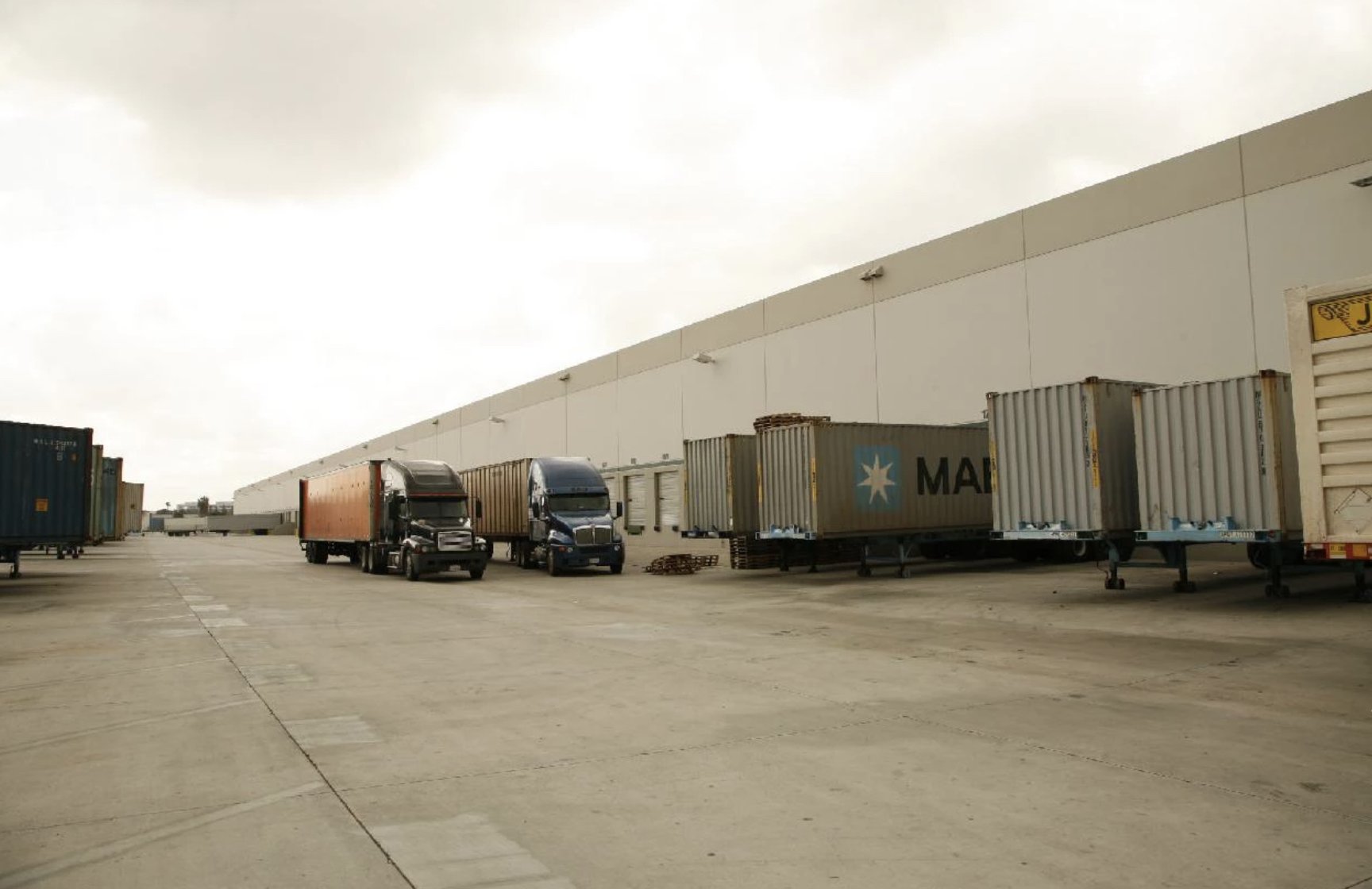
    NEXT has also pioneered an approach that merges technology and real estate, setting up yards just miles away from the ports of Los Angeles and Long Beach. In partnership with the terminals, NEXT utilizes peel piles to move containers through the ports more rapidly.

    The results have been tremendous:

    • Our customers see a 167% increase in containers pulled per truck
    • We’re decreasing environmental impact by limiting the amount of time trucks idle while waiting to get in and out of the ports
    • We’re cutting demurrage fees out of the picture
  • NEWS: NEXT Expands Drayage Marketplace

    NEWS: NEXT Expands Drayage Marketplace

    We have some exciting news to share! After a successful pilot program allowed qualified independent owner operators and small fleet drivers to access L.A. and Long Beach port loads directly through the NEXT mobile app, we are now expanding the program.

    As a result of this successful pilot program, the drayage marketplace will be open to more users, enabling drivers to gain access to high-paying, local routes.

    Drivers who meet the qualifications for drayage work, such as having a TWIC Card, will soon start to see drayage loads automatically populate in the NEXT app.

    At NEXT, we’re empowering truck drivers and creating technology solutions that put #DriversFirst. With our drayage marketplace, we are truly listening to owner operators and with this marketplace are focusing on short routes, cutting down on empty miles and other pain points associated with port work.

    The pilot program has resulted in positive feedback from drivers so far and NEXT CEO, Lidia Yan agrees it’s “important to be close to home, whether that’s to sleep in their own bed or to be around their families. Our drayage marketplace pilot proved this is an option, while increasing earnings. Last month, we paid a driver more than $1,000 in a day over 850 times.”

    For more information on our drayage marketplace, visit nexttrucking.com or call 855-688-6398

  • Transloading 101: Save Time & Money

    Transloading 101: Save Time & Money

    To transload or not to transload — that is the question.

    Transloading services have increasingly become an integral part of moving goods that arrive at a port and travel inland. So, what exactly is transloading? Let’s take a closer look.


    Most freight comes by way of shipping containers on large vessels. This standardization has greatly increased the use and efficiency of transloading – which is the process of moving the contents from a 40- or 45-foot ocean container to a domestic 53-foot intermodal rail container, over-the-road truck trailer, or consolidating freight to a less-than-truckload carrier.

    Due to increased international trade and the growth of e-commerce, transloading has become a standard method for shipping goods in recent years, especially in and around the L.A. port complex where as much as one-third of containers coming through Southern California are transloaded.

    In the ultra-competitive market of retail shipping, companies are constantly looking to gain an advantage and transloading facilities are one way to save time and money when complicated logistics are involved. In fact, many long-haul shipments of goods often involve multiple shipping companies, multiple modes of transit, or both before the shipment reaches its ultimate destination.

    Retail giants such as Target, Kohls, Williams Sonoma and Wal-Mart continue to drive the current rise in transloading services.

    To find out more about NEXT Trucking’s transloading services, please visit nexttrucking.com or call 855-688-6398.

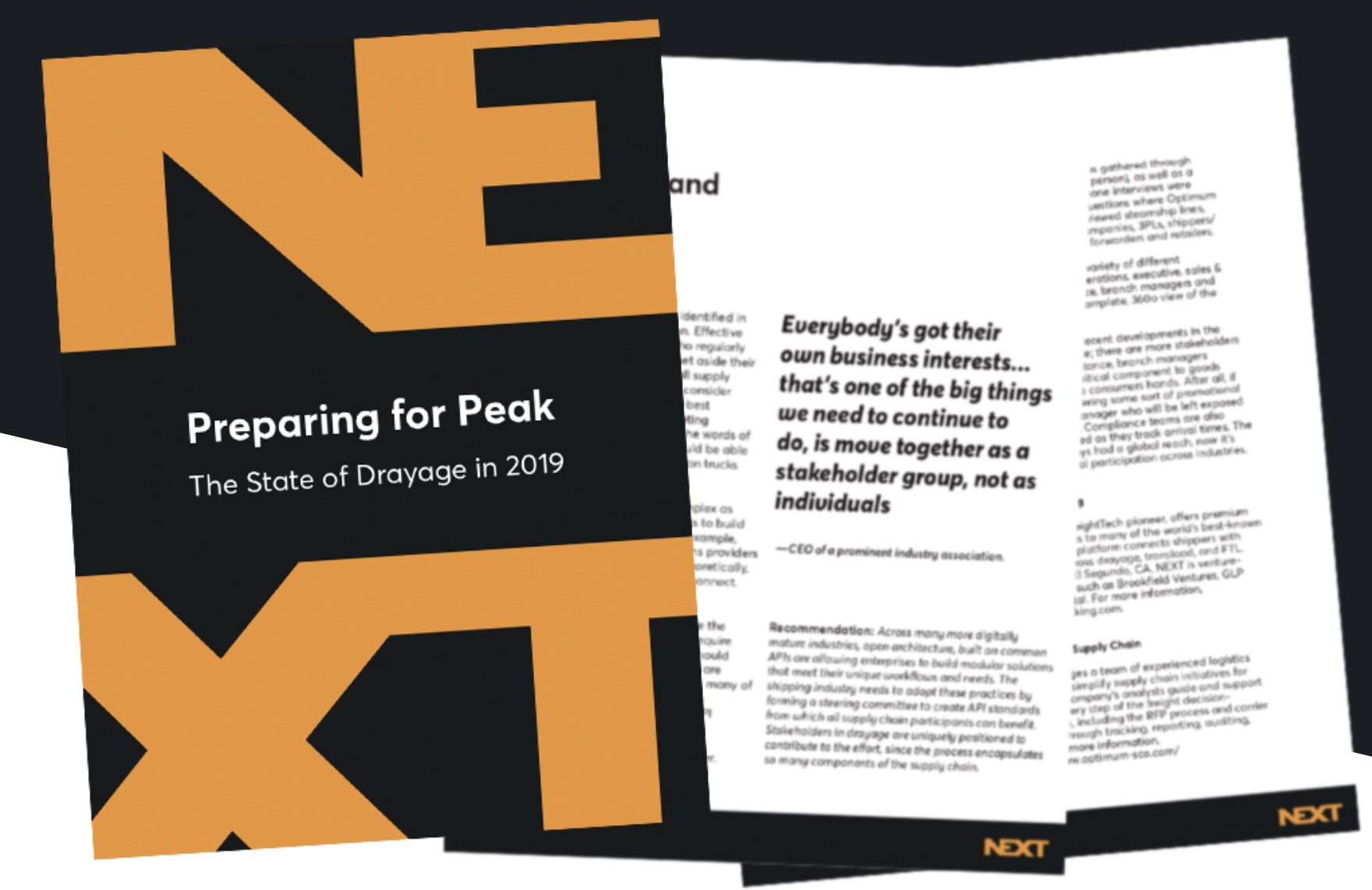
  • Preparing For Peak: The State of Drayage 2019

    Preparing For Peak: The State of Drayage 2019

    We surveyed the #logistics ecosystem to understand what shippers want out of their suppliers, and who’s to blame for congestion at the ports.

    Key recommendations from the report include:

    • Stakeholders in drayage are uniquely positioned to implement standardized industry APIs
    • Incorporating existing technology to increase transparency in drayage and improve outcomes and fluidity
    • Transloading optimizes efficiency and mitigates the amount of time spent driving empty containers

    “The regulatory environment and geopolitical climate have combined to delay the start of peak season, but as we get closer to the holidays, we anticipate that volumes will see a prolonged spike that lasts through January 2020,” said Bobby Napiltonia, Chief Revenue Officer for NEXT Trucking. “This research shows what’s possible for the industry as technology continues to influence today’s best practices, and establishes concrete steps that shippers can take immediately to prepare for what will be a frantic end of the year.”

    Download the White Paper Here

  • Introducing Instegration

    Introducing Instegration

    Earlier this month, NEXT unveiled a partnership and new product with Bristlecone, a supply chain technology solutions provider. The partnership is the culmination of months of work, and opens Bristlecone’s EDI integrations up to NEXT’s shipper-base and driver marketplace.

    Bristlecone has built integrations with 2,000 EDI solutions, which is an incredible feat. However, it speaks to the complexity of selecting a supply chain technology… This isn’t an office environment where Windows and Mac are the established players and Google’s Chromebooks are trying to gain acceptance.

    There are more than 2,000 options to choose from.

    Through our partnership and product, which we’re calling Instegration, any of NEXT’s shippers or carriers with an EDI solution will be able to seamlessly communicate, even if they’re working with disparate EDI solutions. By adding this layer to our marketplace, we are enabling shippers to have more visibility, while empowering carriers and OOs to have access to more cargo. We’re extending the value of EDI investments for all of the players in our marketplace. We’re also making it so new shippers can onboard with us in a matter of minutes.


    For the last few months, NEXT executives have discussed a “new norm” for the supply chain and logistics space, touting how data and data sharing will be globally transformative. This is an example of what we mean, and kicks off a series of initiatives that we’ll be rolling out as we help the logistics industry drive to a new normal.

  • What Is a Truck Driver’s Salary?

    What Is a Truck Driver’s Salary?

    At NEXT, it’s our goal to offer solutions and technology that improves the lives of truck drivers every single day. A big part of that is helping drivers understand just how much they can earn on a weekly basis. Many carriers working with NEXT can earn up to $1000 a day in our Marketplace.

    For context, a quick web search on “how much does a truck driver make?” brings up results that range from $3,500-$6,000… per month. NEXT has never been in the game of paying drivers as little as possible. When we learned drivers were making more than a monthly average every week, we approached these drivers to ask how they were doing it, and to come up with ways we can help other drivers replicate it.

    In fact, that’s one of the key reasons we created our Carrier Advisory Board. We’re working with outstanding OOs and dispatchers to uplevel how much drivers are paid.

    Does this mean every driver will earn $1k per day driving for us?

    No, but that’s our goal.

    If a driver wants to earn $1,000, they can opt to take round trip loads and do it. If they decide to work less hours, earn $10k per month ($500 per day x 5 days per week x 4 weeks per month), and be able to take their kids to school in the morning, that’s great too.

    We’re empowering drivers to work when they want and how they want.


  • Introducing Our Drayage Referral Program

    Introducing Our Drayage Referral Program

    Today, we’re announcing a new drayage referral program — one of our #DriversFirst initiatives. Any driver in our marketplace will have the opportunity to earn $250 for every drayage driver they refer to NEXT.

    The Details:

    • We are kicking the program off today, on 10-4 (which is pretty perfect!)
    • Referred drivers must complete 5 loads by 12/31/2019 for referrer to receive bonus
    • Newly on-boarded and active O/Os are immediately eligible to participate in the referral program
    • Referrers must remain compliant in order to be eligible for referral award
    • The referrer will receive $250 for each referred O/O who completes 5 loads

    Our referral program will run through October 31, 2019. To submit a referral or for more information, please send an email to: referrals@nexttrucking.com 


    You Spoke, We Listened

    NEXT is also pleased to announce that we have established a Carrier Advisory Board (CAB) as a way to ask our carrier community how we can be a better partner. One of the most common requests was a referral program, so this is a direct result of what the independent drivers we work with are telling us.

    Right now, the Carrier Advisory Board is growing and we’d like to hear more thoughts from drivers like you. If you’d like to hop in our CAB (see what we did there!) email CAB@nexttrucking.com


  • Insider Hacks To Navigating Crowded Ports

    Insider Hacks To Navigating Crowded Ports

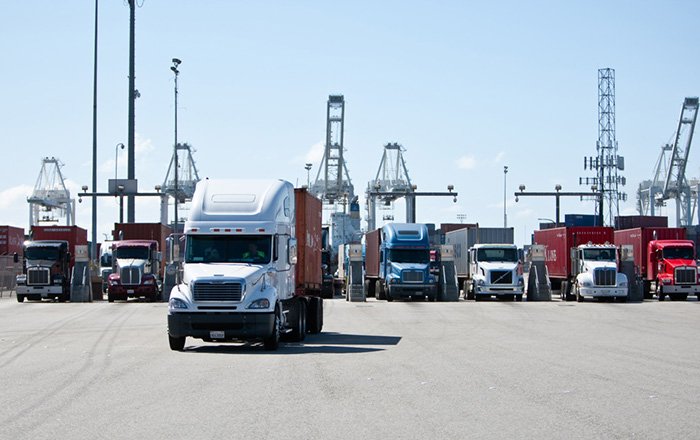
    In twelve years as a proud owner-operator, Marvin Estrada has spent more than his share of time waiting in crowded ports. On this day, Marvin arrives early and takes his place in line. Hopefully, it won’t be too long today Marvin thinks, as he tunes the radio to his favorite station.

    port-los-angeles-trucks-enterance_0


    One hour in and Marvin’s rig hardly moves. At two hours, the line begins to inch forward, but ever so slowly. With his appointment time rapidly approaching, Marvin can feel his grip on the wheel tightening and his pulse rising. Is he going to make his appointment? The odds aren’t looking good, but hopefully, the dispatcher can find him a later time slot.

    After over three hours in line, Marvin finally reaches the loading dock. He watches his freight descend only to stop and suspend inches from his chassis. Tragically, the long line ran Marvin’s time into the operator’s lunch break—nothing will move for another hour and a half. After another 35 minutes at the mechanic station, and an hour and a half in the terminal exit line, Marvin is finally on his way.

    portofla-ap


    Sadly, this story is all too common for today’s drayage drivers. For owner-operators like Marvin, who currently drives and recruits other drivers for NEXT Trucking, overcrowded ports and long lines are a way of life. Nearly 63% of drivers say they wait three hours or more at shipping docks. According to the April 2019 FREIGHTWAVES Port Report, wait times in Los Angeles ports run around 120 minutes, with the Elizabeth New Jersey port running about 159 minutes.


    Trucks-with-shipping-containers-at-the-Port-of-Los-Angeles


    Marvin speaks to the stress drayage drivers feel. “It’s just crazy. It’s a mess. One of the ports is backed up five miles, out to the freeway, right now. Crowded ports with long lines make our jobs as owner-operators so much harder.”


    But wait—all isn’t gloom and doom. Not a moment too soon, here are some insider hacks to help drayage drivers better navigate today’s crowded ports.


    1. Book Earliest Appointment- Try to book one of the first appointments of the day and arrive as early as possible. If the terminal opens at 8 AM, arrive between 6 and 7 AM and make line. The earlier, the better to get the jump on the competition.


    IMG_7543


    2. Avoid Break Times- As many terminals open at 8 AM, the first break is usually around 10 AM for 30 minutes. Lunch break typically starts around 11:45 AM and ends around 1:15 PM. Wise carriers avoid scheduling on either side of these time slots. The best strategy is scheduling early around 8 AM or later around 3 PM.


    3. Be Prepared to Reschedule- If it becomes evident that a scheduled appointment time isn’t going to work—don’t panic. Immediately reach out to dispatch and see if a later time may be available. If this isn’t an option, remain in line and proceed to the pedestal. With a little good fortune, the crew on duty will understand the circumstances for the late arrival, and proceed to load your freight.

    IMG_0092


    4. Bring Your Chassis- This will save significant time as you won’t need to make a mechanic stop. These stops can become serious bog downs if you are using a chassis that belongs to the port. Due to liability, the terminal mechanics must examine these thoroughly, which can easily add 30 minutes to an hour of wait time. Bring your chassis in good condition (correct tire pressure, working lights, no red flags), and you can avoid the mechanic stop entirely.


    5. Perform Self-Checks- Before approaching the in-gate pedestal be sure all the specific appointment details are correct. Make sure you have the right time as well as booking and appointment numbers. Nothing is worse than a long wait only to be sent back for one tiny incorrect detail.

    After freight is loaded, be sure to hop out and confirm the container’s identity. Verify all container numbers match and the container is sealed correctly. A minute or two spent now can save hours later by avoiding the trouble window.


    Proactively use your waiting time to catch and address errors before they result in delays. When an error becomes obvious, waste no time contacting dispatch to obtain accurate information. The time you save will be your own.

    hybridshuttlecarriers


    6. Know Your Ports and Embrace Automation- Drayage carriers can make their lives easier by developing an intimate knowledge of the ports and terminals they work. Some terminals have better reputations, while others don’t. Knowing and selecting faster options given a choice can go a long way to lessening carrier stress and increasing income.


    Automation is driving increased speed and efficiency in many industries—and drayage is no exception. Only two fully automated terminals exist in North America—Long Beach Container Terminal (LBCT) at Middle Harbor in Long Beach, and TraPac at the port of Los Angeles. The Global Container Terminal in New Jersey and a few locations in Virginia employ semi-automated processes at their facilities. These numbers seem sure to grow with increased knowledge of automation’s advantages.

    458_TrapacLA2015


    Marvin Estrada can’t hide his enthusiasm when discussing the benefits of automated robotic cranes loading containers. “Robots don’t take lunch or get bored. With automation, drivers can be in and out of a terminal in under 30 minutes.”


    For Marvin and other savvy drayage drivers, the choice is obvious—jump on the opportunity to work in ports and terminals that currently embrace automation.


    7. Get Your Mind Right- We humans appear to better cope with adversity when allowed to prepare. The strategy of mentally prepping for the worst and optimistically hoping for the best seems to benefit most. In short, as a drayage driver today be ready for long lines and extended waits—all the while focusing on remaining calm.


    According to Marvin, honking may feel good at the moment, but only increases tensions and further slows everyone’s roll. His best advice, after twelve years as an owner-operator, is as simple as it is wise. “Always start your workday with positive energy, stay calm in the heat of the moment, and, oh yeah, bring lunch and water.”