Category: NEXT News

  • Our Account Management and Sales Teams are Growing!

    Our Account Management and Sales Teams are Growing!

    In February our account management and sales teams added 3 new members! We are proud to welcome Cecilia and CJ (not pictured) to the Account Management team, and Dede to the Sales team!

    Cecilia Romero is joining the NEXT Trucking as an Account Manager. When she is not helping accounts, she enjoys spending time with her dogs or being at Disneyland with her family.

    Christopher “CJ” Yu is another one of our new additions. Besides being a great Account Manager, he is also a fan of musical artist Drake and basketball player LeBron James.

    Our newest Enterprise Sales Representative, Dede Aguayo, loves sports. She played NCAA Division 1 softball for San Diego State University and currently coaches youth softball and soccer teams.

    We are so excited to have these new logistics superstars on our team to serve our rapidly growing account base!

  • Utilizing Technology to Become a Preferred Shipper

    Utilizing Technology to Become a Preferred Shipper

    If you have ever had to spend what seemed like hours looking for a parking spot, you know that it can turn into what feels like the longest time of your life. Now imagine trying to find that same parking spot after working 10 hours straight. You can not even stop and get out until you find a place to park. Sound bad? Oh yes, I forgot to mention that you are driving a 60 foot long vehicle. That lot you see up ahead has “no vehicle over 30’ allowed” sign. You are tired, hungry, and you miss your family. But even after 30 minutes of looking for a place, there are none to be found. Finally, 45 minutes and 10 miles away from your destination, you find a place.

    This is what many truck drivers experience every day they are out on the road. Parking can be a tough thing when you are driving a big rig. According to the American Transportation Research Institute, about 63% of drivers are taking 15 minutes or more each day to look for parking in the time window of 4:00 pm to 11:59 pm. That means that over the course of a year, each driver spends approximately 65 hours looking for a place to park. Yes, 65 HOURS. Essentially 1.5 work weeks each year just looking for a place to park. Often times, when the driver does find a place to park, the times he is allowed to park there are restricted, further complicating his rest schedule.

    What can you as a shipper do to help alleviate this?

    1. Allow drivers to park on your premises while waiting for a pick up or delivery appointment. Yes, space may be limited, but even if you make room for 1 or 2 trucks, you will be helping a driver stay rested and focused. Additionally, you will improve the relationship with your drivers, exponentially improving your retention rate. This is critical in the current tight capacity market!
    2. Load and unload trucks in a timely manner. A Department of Transportation general audit found that detention time is costing drivers $1 billion dollars per year and that a 15 minute wait time can increase the accident rate by up to 7%. If your dock is empty, put a truck in it! Drivers do not like to wait to be loaded or unloaded. Plus, the faster you can get trucks in and out of a dock, the more shipments you’ll be able to take in and put out.
    3. Become a preferred shipper for carriers. With freight demands up and the new ELD requirements in place, drivers will have to become much more pickier in choosing where to pick up. If you are a shipper with higher wait times, drivers are more likely to choose other shippers, further delaying your shipments.

    What can you as a driver do?

    1. Be respectful. In the same way drivers talk, shipping managers talk to their dock workers. If you as a driver are rude and disrespectful, that is a reflection on you and the entire driver population.
    2. Be on time and communicate. Many of the docks you are going into are busy. Yes, there can be delays in transportation and we are all aware of that, but communicate. There is nothing more frustrating than hearing a driver say “I’m 15 minutes away”, only to still be waiting 2 hours later!!

    How can NEXT Trucking be used to your advantage?

    1. Shippers: With our online tracking, you can see exactly where the driver is. Check the traffic around them and if you see they are still 30 minutes out, pull an available truck into the dock and get it loaded! Additionally, by having all your forms generated and kept on the NEXT for Shippers platform, you can save valuable time finding and distributing documents. Streamline your loading dock and become the shipper of choice.
    2. Drivers: Get on the NEXT Trucking app. It is free to download and easy to use. Find your next load fast and easy. Gone are the days of spending 20 minutes on hold with a broker only to find out that the load you are calling about was booked 15 minutes ago. If you see a load you want and the price is right, just smash that “book load” button, and it is yours!

    These may seem like little things, but to both transportation managers and drivers, these little things can add up to big improvements to your business’ supply chains.

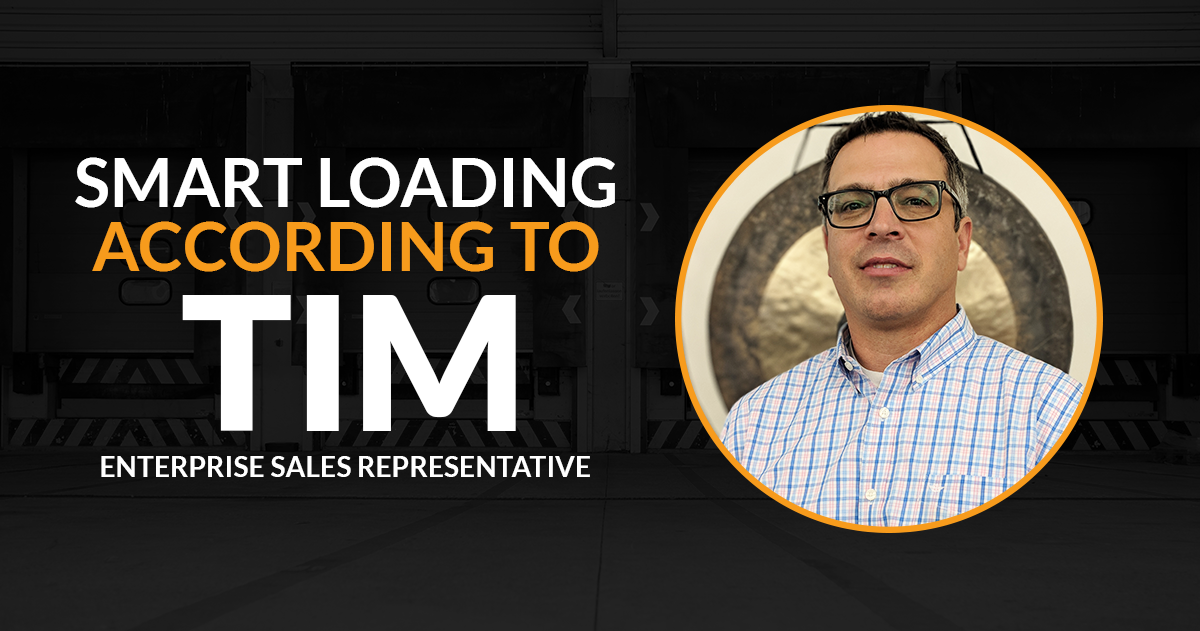
    If you would like a demo of how the software can become valuable to you and your team or your fleet, you can reach Tim on LinkedIn or email him at tim@nexttrucking.com.

  • Tech Talk: How Tesla’s autonomous truck Supercharged the Trucking Industry

    Tech Talk: How Tesla’s autonomous truck Supercharged the Trucking Industry

    Tech Talk is a series where we examine the latest trends in trucking technology and their potential impacts on the industry at large. In our first set of posts, we look a recent innovation to the industry’s keystone: the truck.

    Since Tesla unveiled their autonomous trucks in November 2017, it seems like there is a new story about autonomous trucks every week. For the first time ever, trucks showed up on the floor at the Consumer Electronics Show (CES) in January 2018, with Peterbilt and TuSimple showcasing their autonomous trucks. Multiple companies like Undelv and Pizza Hut have also taken their autonomous trucks to the streets in public delivery tests.

    The Department of Transportation has also begun getting public input from manufacturers, the public, and truck drivers to determine if they should hasten the deployment of autonomous trucks. While the manufacturers of the trucks are moving ahead into production, the vehicle has caused much discussion of its implications within the trucking industry.

    Many within the trucking industry are not happy with the development of the autonomous trucks. A vocal critic of trucking automation so far has been the Brotherhood of Teamsters. Union head James P. Hoffa has said in an interview with Reuters that he worries that the change is coming too fast and more research should be done on the impact of the people involved, particularly in terms of job security and safety.The Center for Global Policy Solutions has also published a report stating that autonomous trucking could hurt the economy of states that have a high volume of truckers such as West Virginia and Mississippi.

    Autonomous truck manufacturers, on the other hand, purport autonomous trucks as a net positive for the industry. Besides integration possible with current freight-tracking systems, the companies claim that autonomous trucks also provide numerous benefits to shippers. The trucks can automatically calculate the most efficient lanes and routes, saving time on delivery. Additionally, the automated trucks can give truckers some respite on the freeway, where long haul truckers spend most of their days. This would lead to improved trucker health and wellbeing, thus helping to alleviate some driver turnover.

    Tech companies rolling out autonomous trucks also argue that trucker job loss will be minimal. Autonomous trucks will still need drivers to navigate busy city streets and load at docks, and though the trucks can cruise down highways, drivers must be able to take over the rig at a moment’s notice. Even under a platooning, a possible model for autonomous truck fleets where one lead truck sends information to the other trucks that allows them to drive autonomously, there would need to be multiple drivers so the driver in the lead truck can be switched out regularly.

    While these advancements hold lots of different possibilities for shippers and the industry, there is still much work to be done to put the infrastructure in place to get autonomous trucks running. Though Tesla has projected a 2019 release of its electrical truck, it has yet to announce a release date for the truck-specific charging stations that it would have to roll out across the nation. In an industry choking under an already large volume of freight demand that the ATA predicts will increase by 37%, autonomous trucks are being hailed by many tech companies as the solution to the driver shortage.

    Whether or not the systems needed to keep the trucks functioning will be ready in time is yet to be known, and more solid research on automation’s impact on trucking has yet to be published. Nonetheless, we’ll have to sit on cruise control and patiently wait to see what the future holds.


    Next time: We take a closer look at the electricity types powering the new generation of trucks.

  • $21 MILLION IN FUNDING: WE’RE MOVING FULL SPEED AHEAD

    $21 MILLION IN FUNDING: WE’RE MOVING FULL SPEED AHEAD

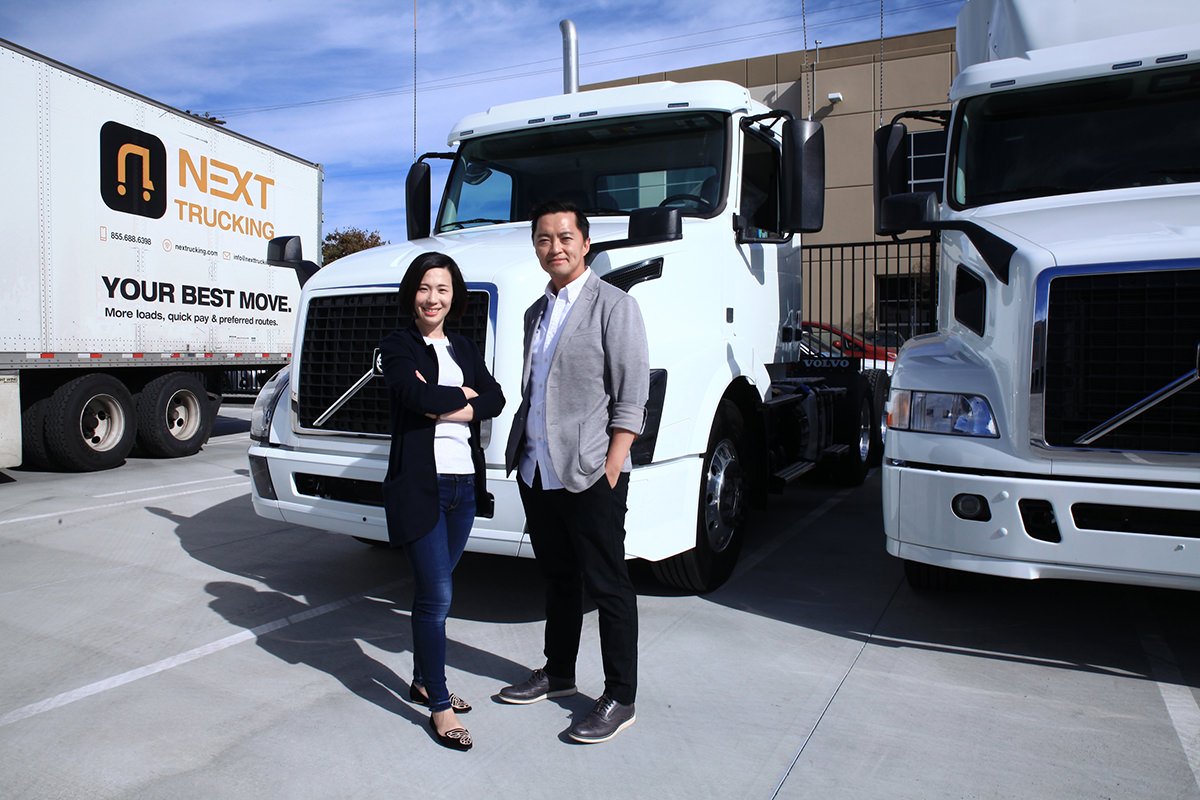
    NEXT Trucking is only one month into 2018 and we already have great news. Today, we announced $21 million series B round of funding led by Sequoia Capital. As well, the VC’s partner, Omar Hamoui is joining our Board of Directors. Omar’s mobile ad platform AdMob was sold to Google in 2009 for $750 million, and Sequoia Capital was one of the first investors in the platform.

    We’re so proud of all we’ve been able to do in only two years. We’re a scrappy team. Even so, we have tripled our revenue year over year. And, our retention rates, on both sides of the marketplace, are through the roof.


    (Pictured above: Lidia Yan, Co-Founder and CEO and Elton Chung, Co-Founder)

    But we’re not resting on our laurels. The funding will go toward hiring the best in the business. Operations and product development will continue to empower the truckers and create a massive virtual fleet of the highest quality independent carriers. Now we will have more ears listening carefully to all parties involved in the supply chain and more engineers and developers working to find ways to solve the crisis brewing with capacity. Our growing team is set on building the best marketplace platform to mitigate reasons behind truckers walking away from their rigs and younger people not entering the field.

    LAdUxCK

    You can read the entire press release that covers the Series B funding, you’ll find it here.

    If you’re a driver and you’re looking for easy booking, full transparency, earning 15 percent more on average, and so much more sign-up here. It’s the first step in making a difference in your life.

    For the shippers looking for vetted drivers, capacity relief and benefit from the best rates, let us know here.

    While we’ve made great strides to-date, we have a mission. Our driver-centric marketplace will continue to positively impact the transportation industry. Stay tuned. Lots more news to come.